When Flat Goes Wrong: Tilted Orbits and Rogue Planets Explained
Not all planets follow the flat disk rule. Learn how gravitational chaos creates tilted orbits, rogue planets, and cosmic exceptions in simple terms.
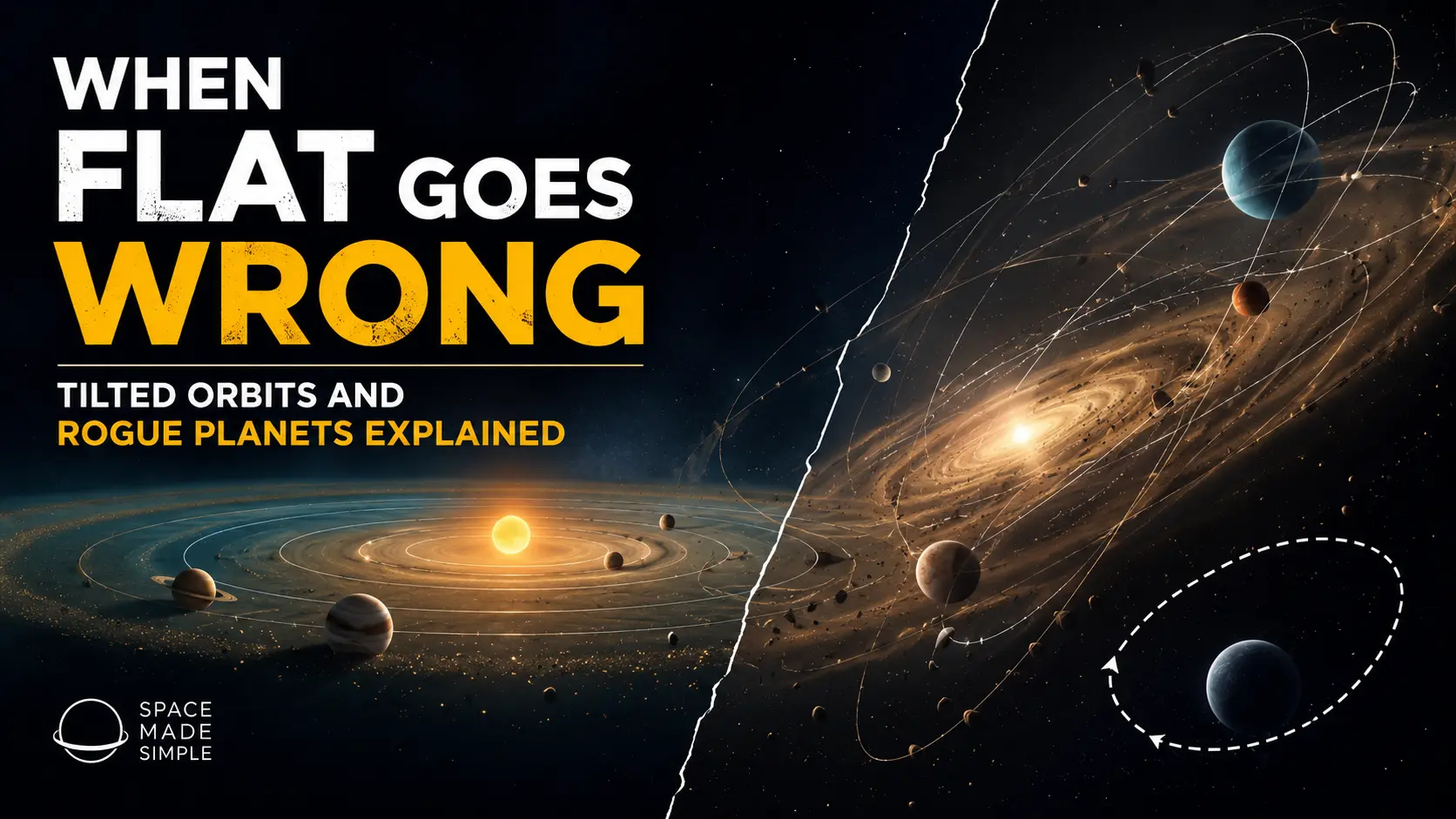
In Part 1 of this series, we learned why planets naturally form in a flat disk thanks to spinning clouds and pizza-dough physics. But if you look closely at our own solar system and beyond, the neat pancake model starts to crack. Some worlds orbit at wild angles. Others have been kicked out entirely into the frozen dark between stars.
The flat disk is the starting line, not the finish line. After planets are born, gravity turns their orderly nursery into a cosmic billiard table where collisions, tugs, and ejections rewrite the rules.
The Gravitational Billiard Table
Imagine setting up eight pool balls in a perfect circle on a flat table. Now give them each a gentle nudge. For a while they roll smoothly. But eventually two balls pass too close. One steals momentum from the other. The loser drops inward. The winner flies outward. Repeat this for millions of years with objects the size of Earths and Neptunes, and you get chaos.
Astronomers call this process planetary scattering. It is the primary reason some orbits tilt, stretch, or break free entirely. The flat disk sets the initial conditions, but mutual gravity among young giant planets determines the final architecture.
Tilted Worlds in Our Own Backyard
You do not need to look at distant exoplanets to find broken rules. Eris was likely flung into its steep orbit by gravitational tugs from Neptune during the solar system’s turbulent youth. Its 44-degree inclination is a fossil record of ancient scattering events that also reshaped the Kuiper Belt.
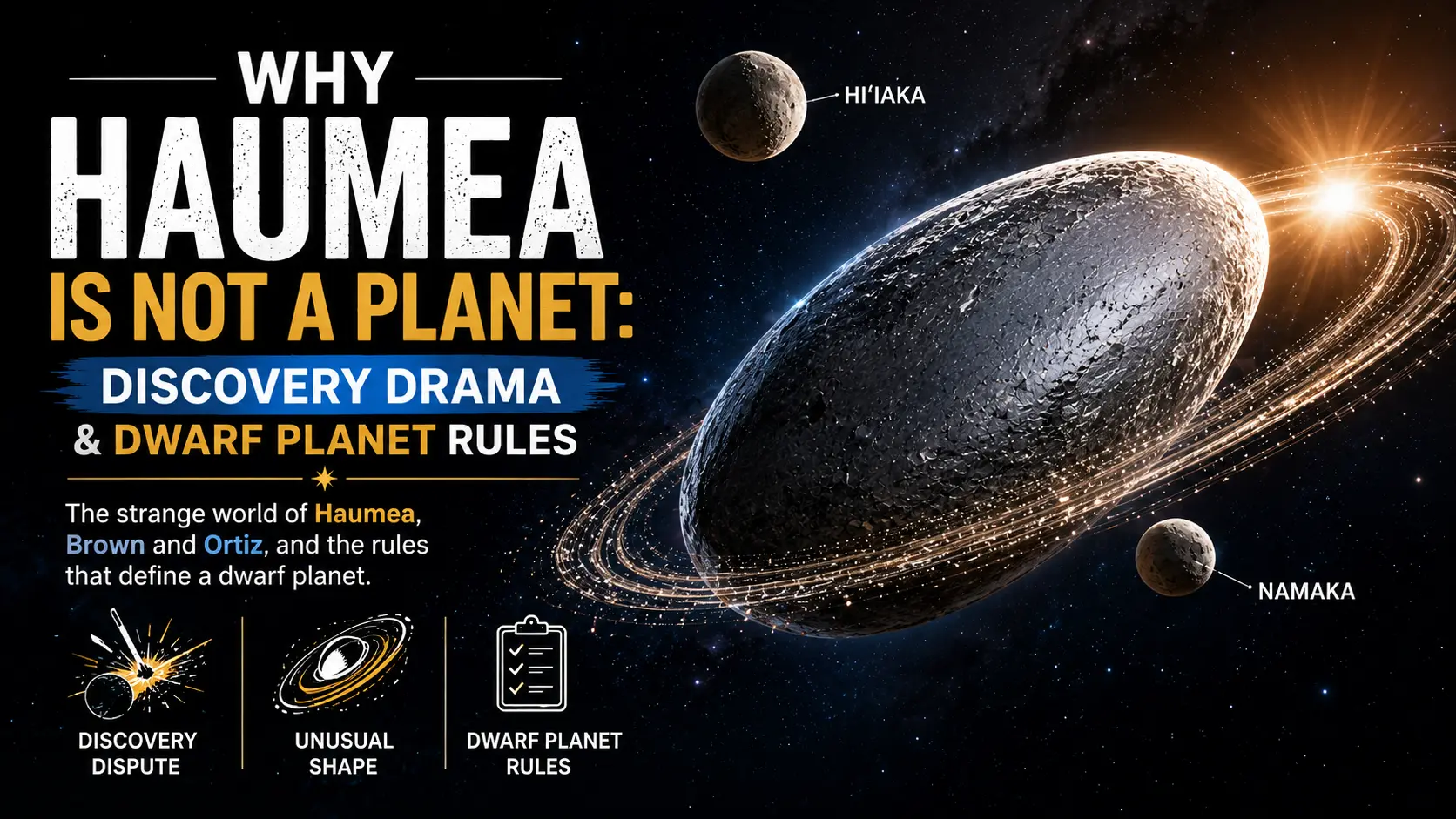
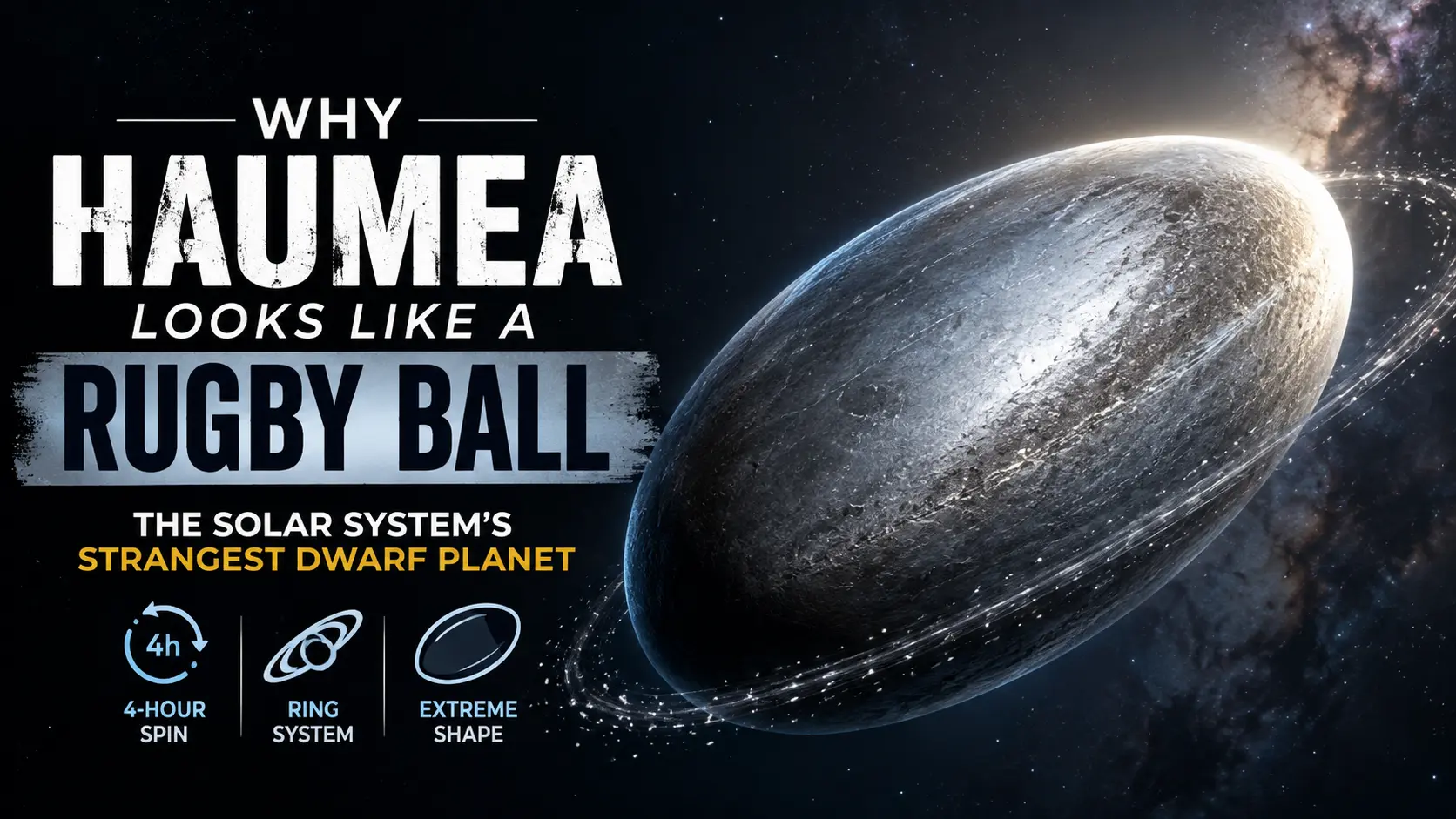
Closer to home, dwarf planet Haumea’s wildly tilted orbit tells an even more violent story. Haumea spins so fast it is shaped like a rugby ball, and its unusual angle suggests a catastrophic collision billions of years ago that shattered its original path. These icy relics prove that gravitational chaos was not limited to the giant planets. Even small bodies bear the scars.
When Planets Get Evicted
Sometimes scattering does not just tilt an orbit. It destroys it entirely. If a young planet passes too close to a gas giant, the slingshot effect can accelerate it past escape velocity. The planet is ejected from its star system forever, becoming a rogue planet drifting through interstellar space.
Estimates suggest there may be more rogue planets than stars in our galaxy. They are invisible to most telescopes because they emit no light of their own. We only detect them when they briefly bend the light of a background star in a microlensing event. Every rogue planet is a casualty of the same gravitational billiards that tilted Eris and Haumea.
Migration: Moving Without Leaving
Not all rule-breaking involves ejection. Some planets migrate inward or outward while staying bound to their star. A planet forming beyond the snow line can interact with leftover gas in the protoplanetary disk and spiral toward its host star. This mechanism explains hot Jupiters, massive gas giants found scorchingly close to their stars where they could never have formed.
Exoplanets like L-98-59 d hint at violent migration histories that reshaped entire systems after the disk dissipated. Their current positions make no sense under the simple flat-disk formation model. Only post-formation dynamical evolution explains them.
Chaos Begins Early
We used to think planetary scattering happened hundreds of millions of years after formation. New observations suggest otherwise. New data from PDS-70c shows gravitational jostling begins while planets are still growing inside their natal disks. Gaps and asymmetries in the disk reveal that baby planets are already pushing each other around before they finish accreting mass.
This means the transition from orderly disk to chaotic system is not a sudden phase change. It is a continuous process that overlaps with planet birth itself. The flat disk and the gravitational billiard table coexist for a time.
Looking Beyond Our Solar System
Our solar system is relatively calm compared to many exoplanet systems. Some stars host planets on polar orbits perpendicular to the stellar equator. Others have multiple giant planets on mutually inclined paths that should be unstable. These extreme architectures are the focus of Part 3, where we will explore alien solar systems that break every rule we have discussed so far.
For readers who want to visualize how scattering works, NASA’s Eyes on Exoplanets interactive tool lets you fly through real planetary systems and see orbital inclinations in three dimensions. The Planetary Society maintains an accessible guide to rogue planet detection methods including microlensing and direct imaging. Finally, for those curious about the mathematical framework behind scattering simulations, the Open Exoplanet Catalogue offers a free database of orbital parameters that powers much of modern dynamical research.