Tau Ceti: Our Nearest Sun-Like Neighbor Explained Simply
Tau Ceti is a G-type main-sequence star, the same classification as our Sun. While there are closer stars to Earth, such as Proxima Centauri
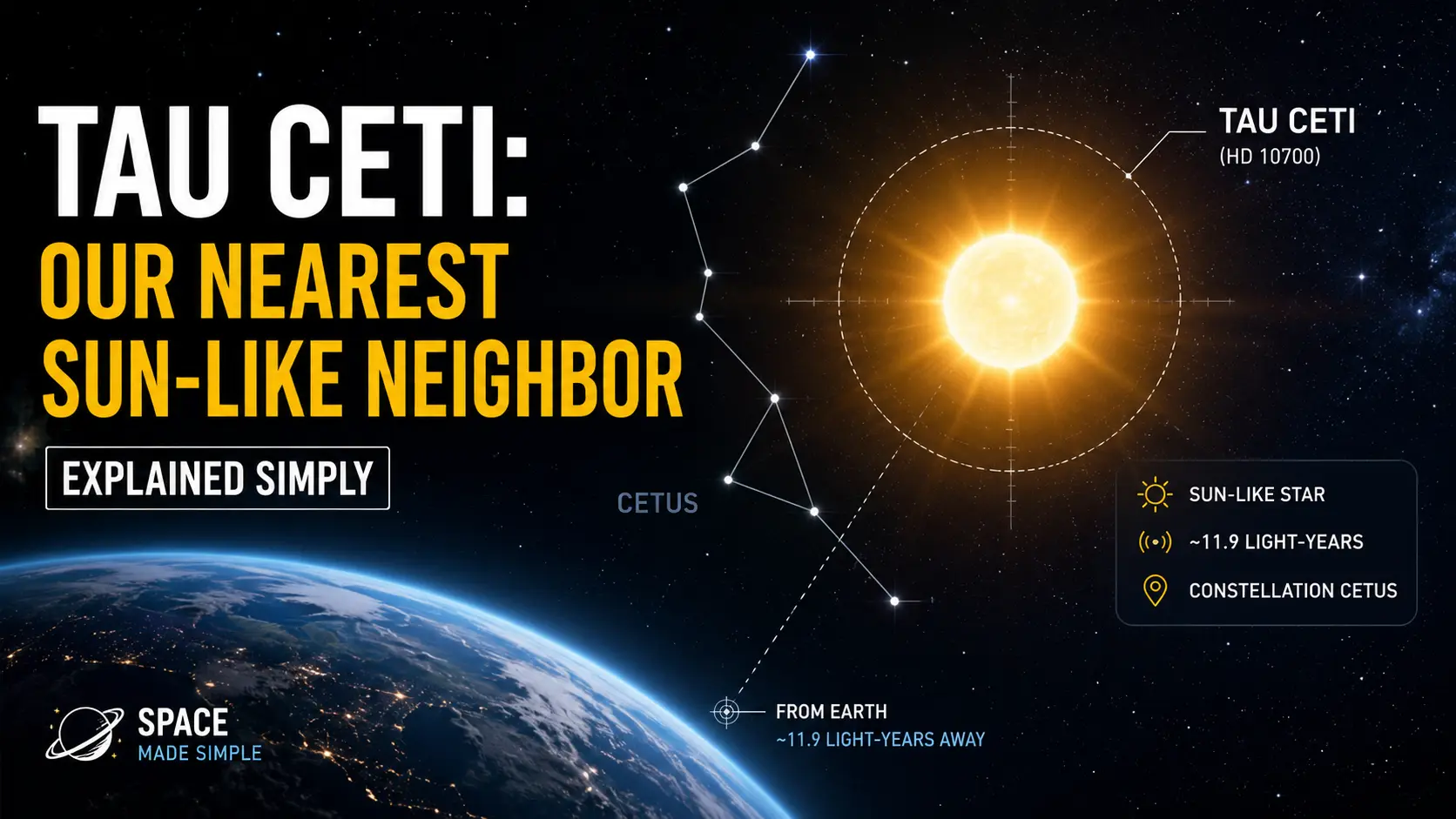
When we look up at the night sky, most stars appear as tiny, identical points of light. But one star stands out for astronomers and space enthusiasts alike: Tau Ceti. Located just 12 light-years away, it is the closest single star that closely resembles our own Sun. This proximity makes it a cosmic laboratory where scientists test ideas about planetary systems, habitability, and whether our solar system is truly unique.
Why Tau Ceti Matters
Tau Ceti is a G-type main-sequence star, the same classification as our Sun. While there are closer stars to Earth, such as Proxima Centauri, they are smaller red dwarfs that behave very differently. Tau Ceti offers something rare: a true solar analog right next door. Its mass, temperature, and age are remarkably similar to the Sun, making it the best benchmark for comparing other planetary systems to our own.
This similarity also fuels imagination. If a star looks like ours, could it host planets like ours? For decades, Tau Ceti has been a primary target in the search for extraterrestrial worlds. Understanding this star helps us answer fundamental questions about how common Earth-like environments might be in the galaxy. For more context on how different stars evolve, you can read our guide on how stars die to see why stable G-type stars like Tau Ceti are so special.
The Search for Worlds Next Door
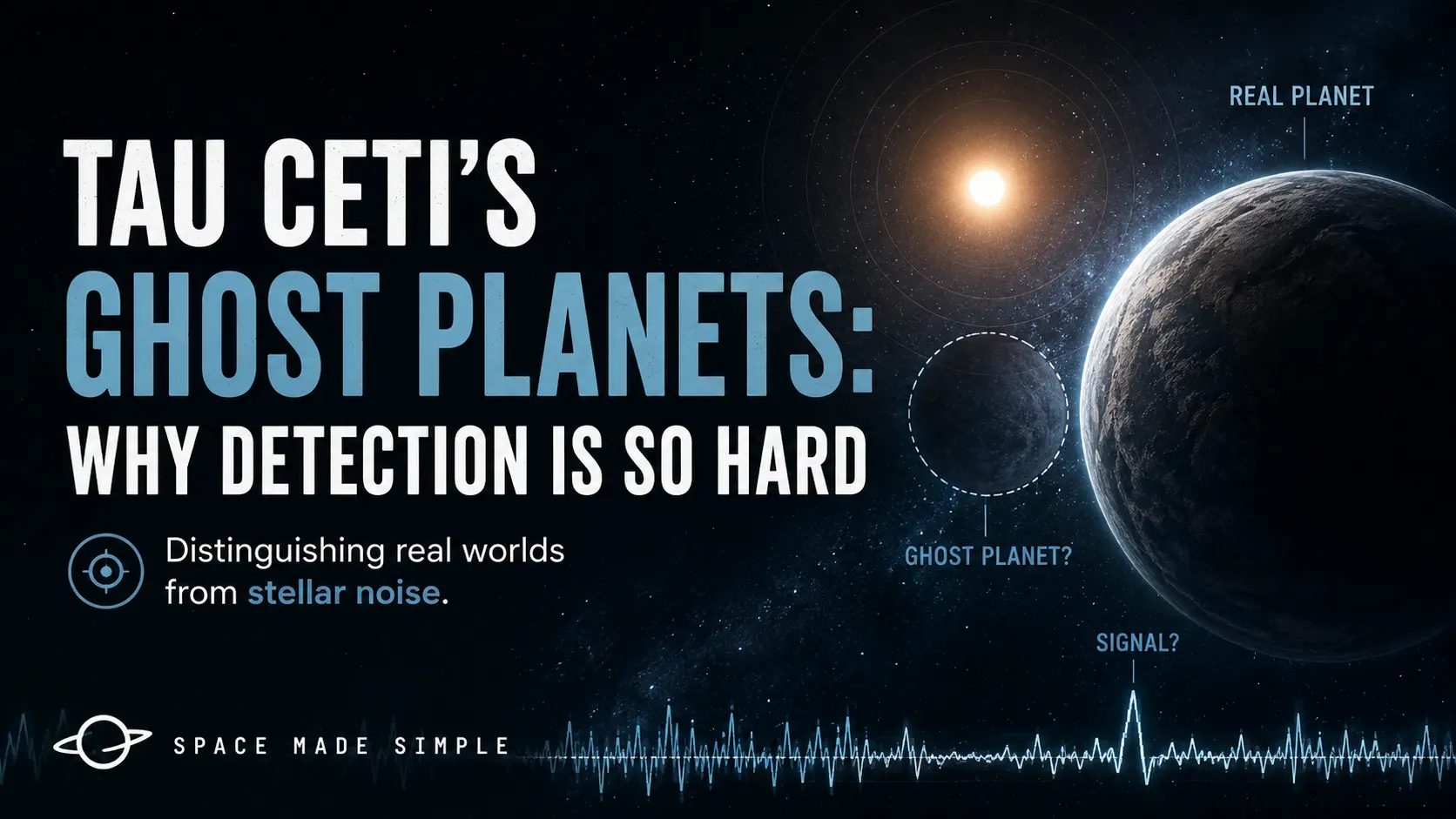
Because Tau Ceti is so close and bright, astronomers have scrutinized it for planetary signals longer than almost any other star. Early radial velocity studies suggested the presence of multiple Earth-sized candidates, including some potentially within the habitable zone. These findings sparked excitement about a nearby "second Earth."
However, science is a process of refinement. More recent analyses indicate that many of these signals may actually stem from the star's own magnetic activity rather than orbiting planets. As of now, there is no unambiguous confirmation of planets around Tau Ceti. This uncertainty does not diminish its importance; instead, it highlights the challenges of detecting small worlds around even the most favorable stars. To understand how tricky exoplanet detection can be, compare this with our article on Teegarden’s Star, another nearby neighbor with debated planetary claims.
A Debris Disk and Cosmic Bombardment
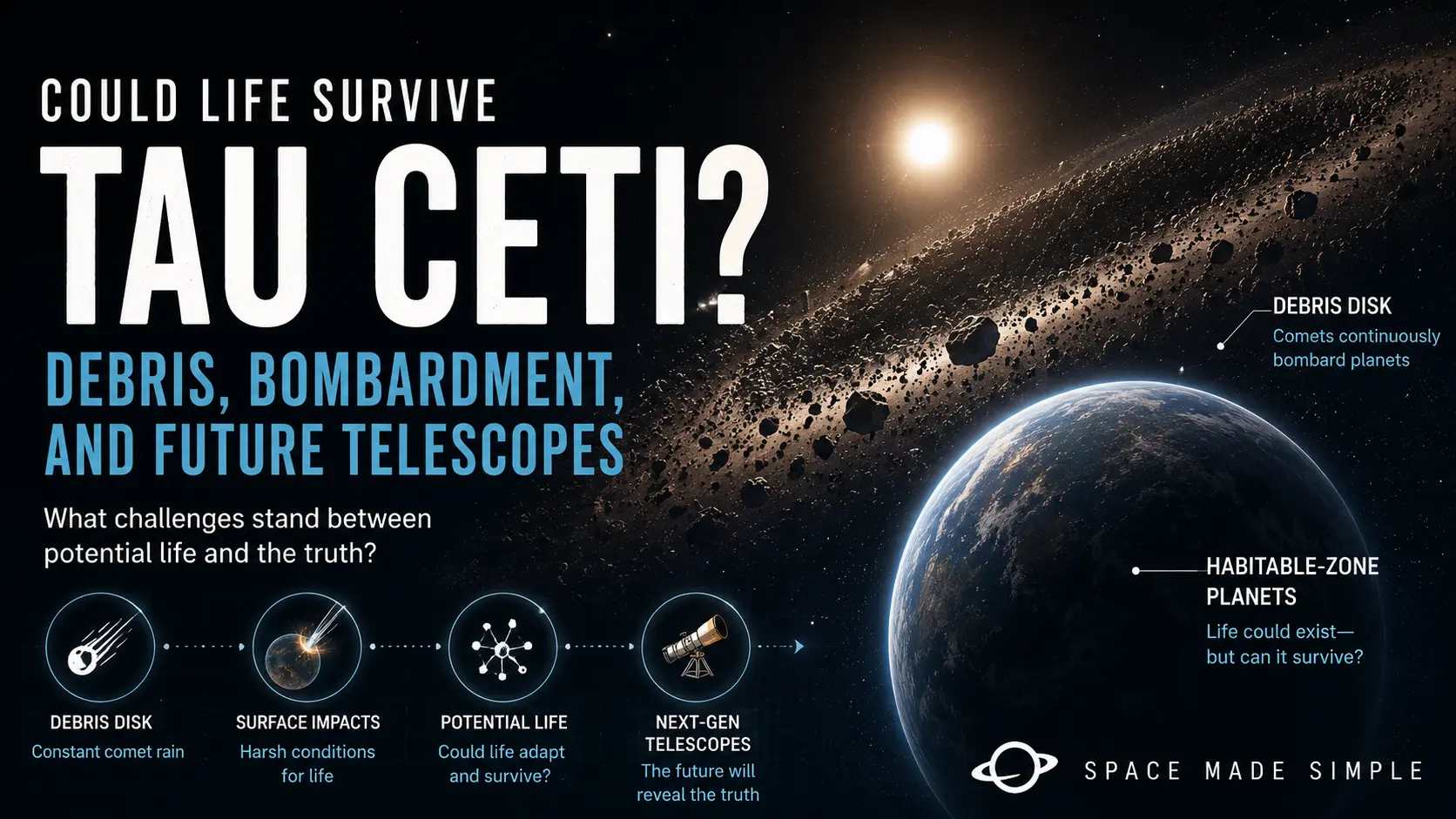
Even if planets remain unconfirmed, Tau Ceti already holds a confirmed surprise: a massive debris disk. Observations show this star is surrounded by far more dust and rocky material than our solar system. This suggests that any planets in the Tau Ceti system might endure constant comet and asteroid bombardment, creating a harsh environment for potential life.
This debris disk serves as a reminder that planetary systems come in many configurations. Our relatively clean solar system might be the exception rather than the rule. Studying Tau Ceti’s dusty environment helps astronomers model how planetary systems form, evolve, and sometimes become hostile to biology. You can explore more about extreme planetary environments in our piece on GJ-3378b and super-Earths in habitable zones.
Looking Ahead
Tau Ceti will remain a priority target for next-generation telescopes. Instruments like the Roman Space Telescope and future ground-based observatories aim to finally confirm or rule out planets around this stellar twin. Each observation brings us closer to understanding whether our cosmic neighborhood is typical or extraordinary.
For now, Tau Ceti stands as both a mirror and a mystery. It reflects what our Sun might look like from afar while challenging our assumptions about planetary formation. Whether it hosts worlds or not, this nearest sun-like neighbor continues to teach us that simplicity in appearance often hides complexity in reality.