Alien Solar Systems That Break the Flat Disk Rule
Some exoplanets orbit backwards, sideways, or around two stars. Discover the weirdest planetary systems that defy the flat disk model, explained simply.
In Part 1 we learned why planets form in flat disks. In Part 2 we saw how gravitational chaos tilts and ejects worlds after birth. Now it is time to leave our orderly solar system behind and visit alien neighborhoods where the rules do not just bend. They shatter completely.
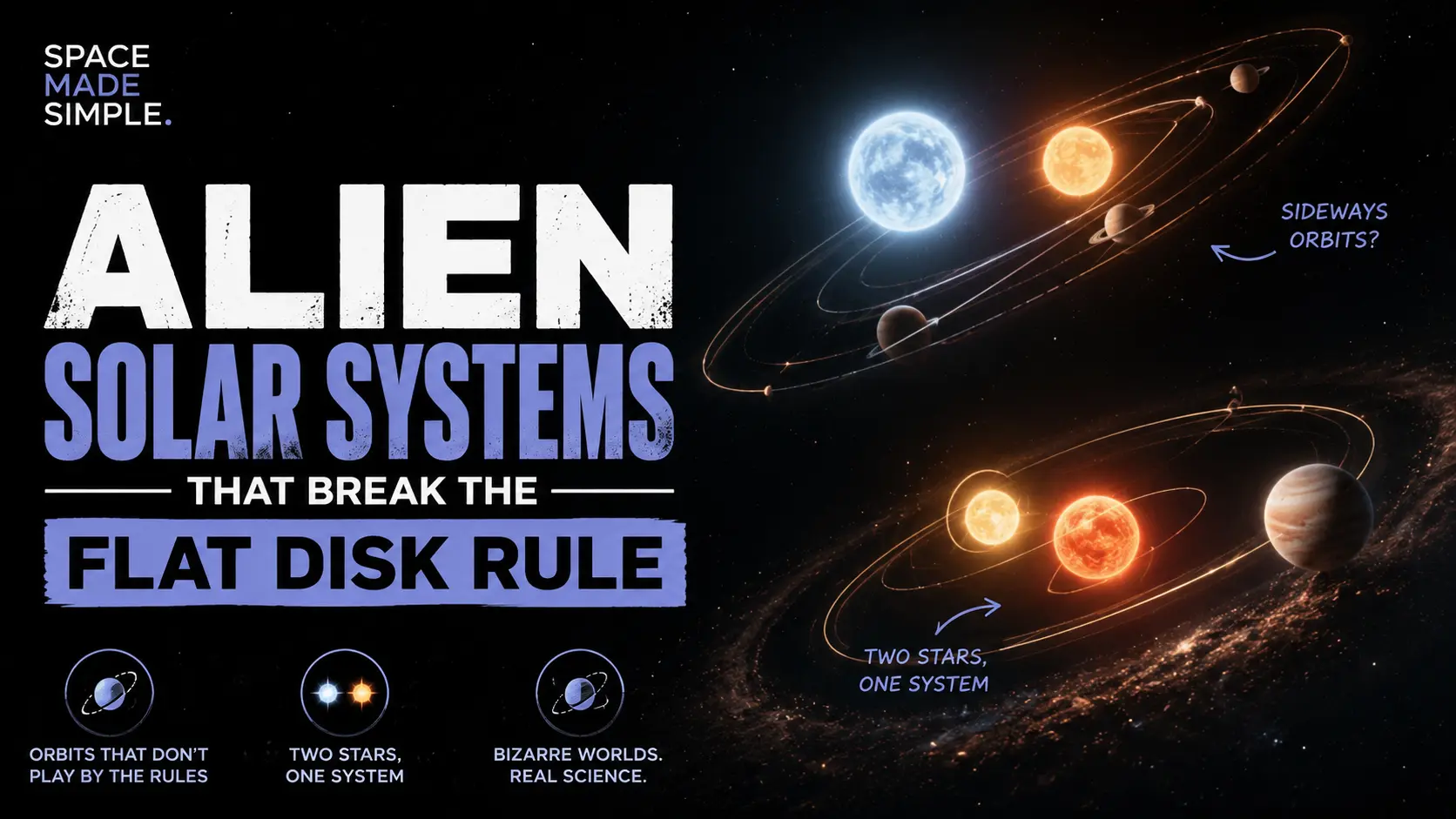
Astronomers have discovered thousands of exoplanet systems, and many of them look nothing like the neat pancake model. Some planets orbit perpendicular to their star’s equator. Others circle two suns at once. A few even travel backwards relative to their star’s spin. These are not errors in the data. They are real architectures forged by cosmic processes we are only beginning to understand.
When Planets Orbit Sideways
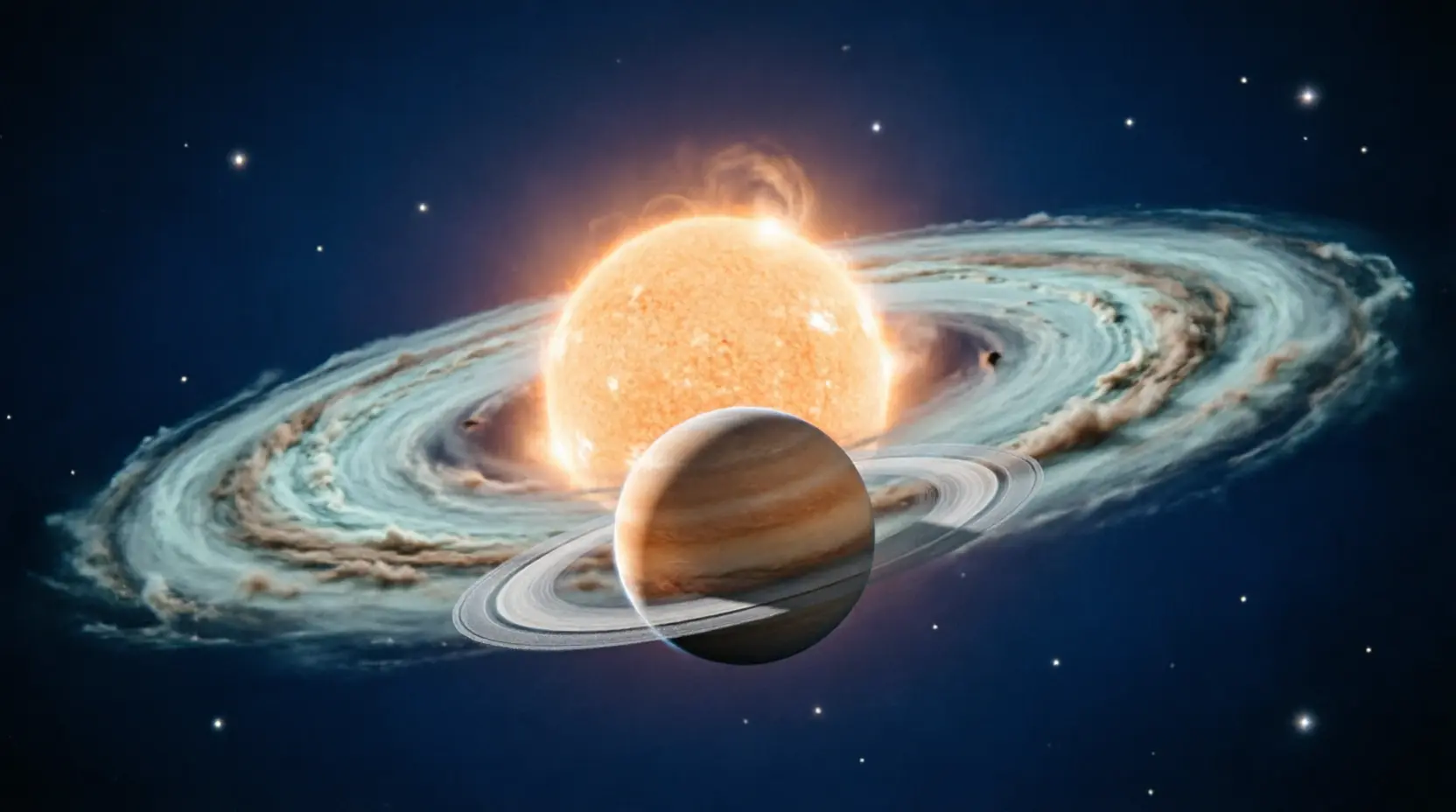
Our solar system’s planets all orbit within a few degrees of the Sun’s equatorial plane. But beyond our neighborhood, misalignment is common. Hot Jupiters, massive gas giants scorchingly close to their host stars, frequently orbit at extreme angles. Some are tilted more than 90 degrees, meaning they travel over the star’s poles in what astronomers call retrograde orbits.
How does this happen? One leading explanation involves a distant stellar companion. If a binary star orbits far from the planet-forming disk, its gravity can slowly torque the entire disk out of alignment over millions of years. The planets then form in a tilted plane from the start. Another mechanism combines high-eccentricity migration with tidal friction. A planet gets flung onto a wildly elliptical orbit by a neighbor, and as tides circularize that orbit near the star, the inclination gets locked in at an extreme angle.
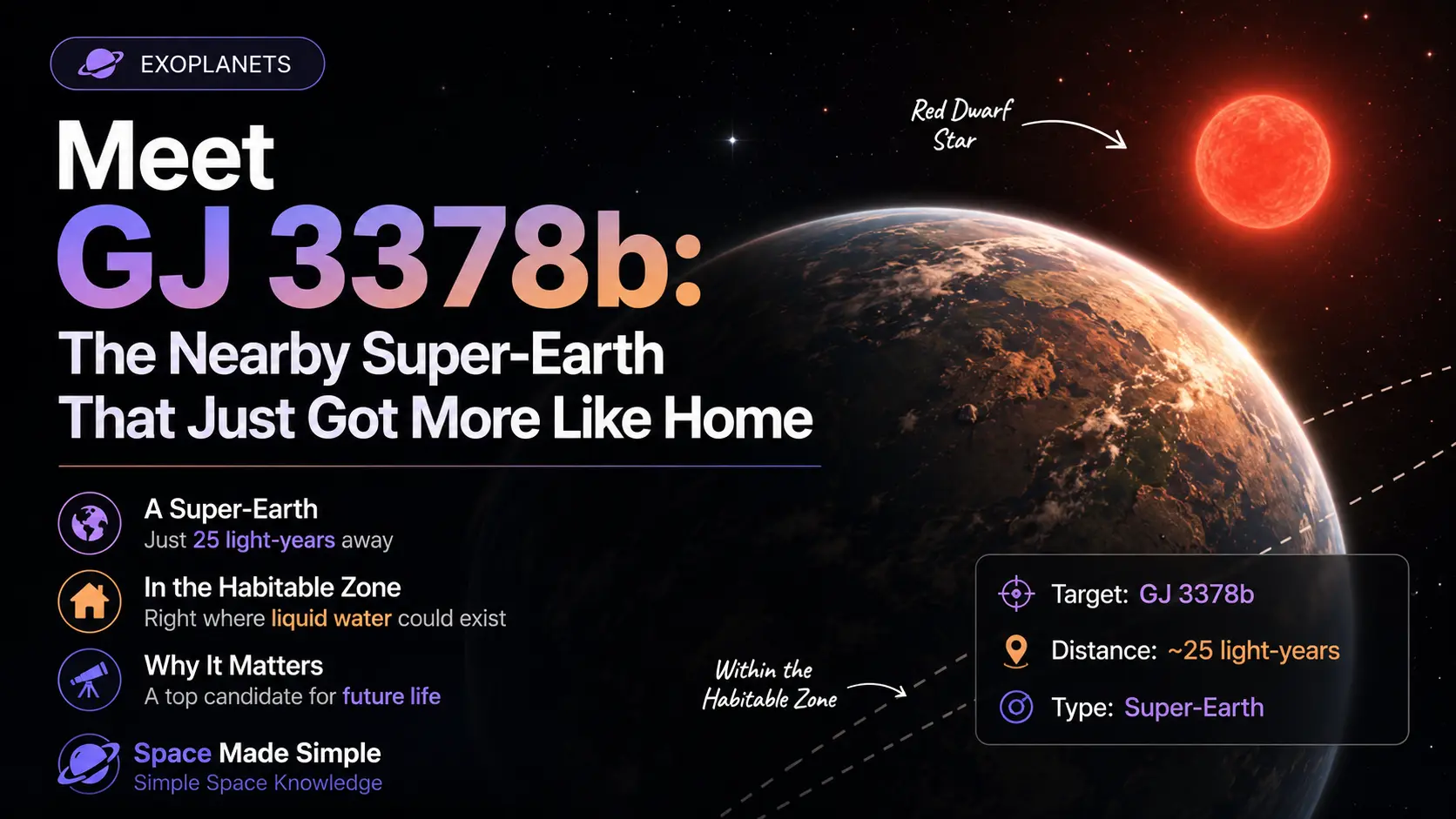
Super-Earth GJ-3378b orbits its star in a way that defies simple disk models, adding to the growing catalog of systems where standard formation theories fall short. Each new discovery forces theorists to refine their simulations.
Compact Systems Born From Chaos
Not all rule-breaking involves giant planets on wild orbits. Some of the most puzzling architectures are small, tightly packed systems with multiple super-Earths orbiting closer to their star than Mercury orbits our Sun. These systems could not have formed in place because the disk would have been too hot for solid material to condense.
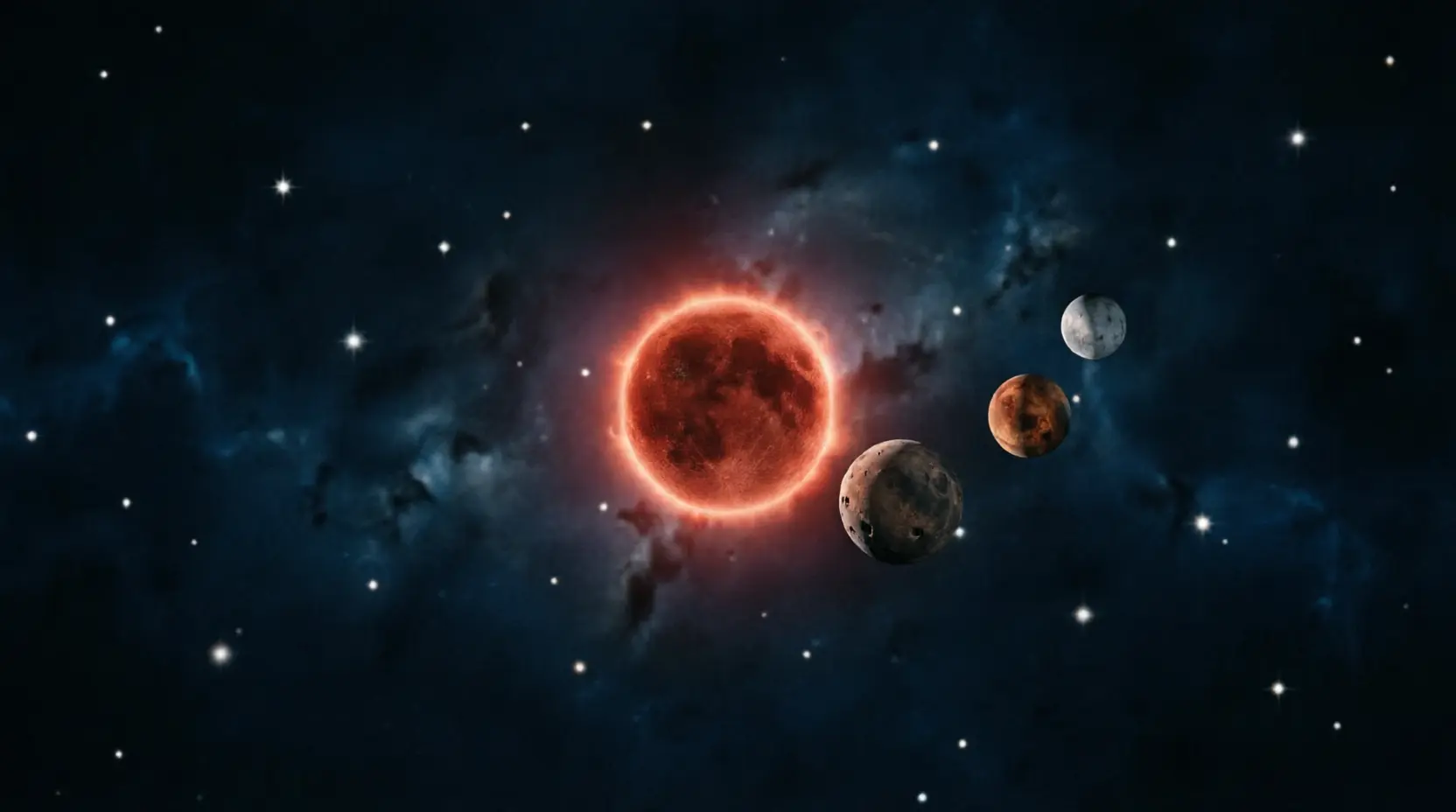
The compact L-98-59 system likely underwent dramatic reshuffling after its disk vanished, with planets migrating inward and settling into resonant chains that now appear impossibly precise. These architectures suggest that post-disk dynamical evolution is not rare. It may be the norm for small planets around low-mass stars.
Misalignment Starts at Birth
We used to assume that spin-orbit misalignment was always a post-formation phenomenon caused by scattering or binary torques. Observations of infant systems now challenge that assumption. Even infant systems like PDS-70 show early signs of spin-orbit misalignment, suggesting that the protoplanetary disk itself can be born tilted relative to the star’s rotation axis.
This means some exotic architectures are not the result of later violence. They are inherited from the very moment of star formation, possibly due to turbulent accretion flows or asymmetric infall from the parent molecular cloud. The flat disk rule was never absolute. It was always a statistical tendency with built-in exceptions.
Planets Around Two Suns
Perhaps the most visually striking violation of the single-star flat-disk paradigm is the circumbinary planet. These worlds orbit both stars in a binary pair, tracing paths around a shifting gravitational center that would destabilize most orbits. Yet they exist, and they are surprisingly common.
Circumbinary planets must form in a disk that is itself dynamically stressed by the central binary. Simulations show that such disks are truncated, warped, and prone to precession. Planets that survive there are testaments to nature’s ability to build stable architectures in environments that should forbid them. Their existence expands the definition of habitable zones and challenges assumptions about where life-friendly conditions can arise.
Bringing It Back Home
After touring these alien extremes, it is worth remembering that our own solar system is not as boring as it seems. Closer to home, dwarf planets like Makemake remind us that our own system still holds dynamical mysteries waiting to be solved. The flat disk gave us order, but billions of years of subtle interactions continue to write stories we have not yet read.
The next time you see a textbook diagram of neatly aligned planetary orbits, remember that it is one outcome among countless possibilities. The universe is under no obligation to be tidy.
For readers eager to explore misaligned systems visually, NASA’s Eyes on Exoplanets app includes orbital inclination filters that let you sort real systems by tilt angle. The European Space Agency maintains a curated exoplanet science highlights page featuring the latest discoveries on unusual architectures. Finally, for those who want to dive into the raw data behind these findings, the TEPCAT catalog provides a free database of transiting exoplanet parameters including measured spin-orbit angles for hundreds of systems.