Makemake: The Surprising Dwarf Planet With a Hidden Methane Atmosphere
Discover amazing facts about Makemake, from its frozen methane surface to the surprising gas atmosphere detected by the James Webb Space Telescope in 2025.
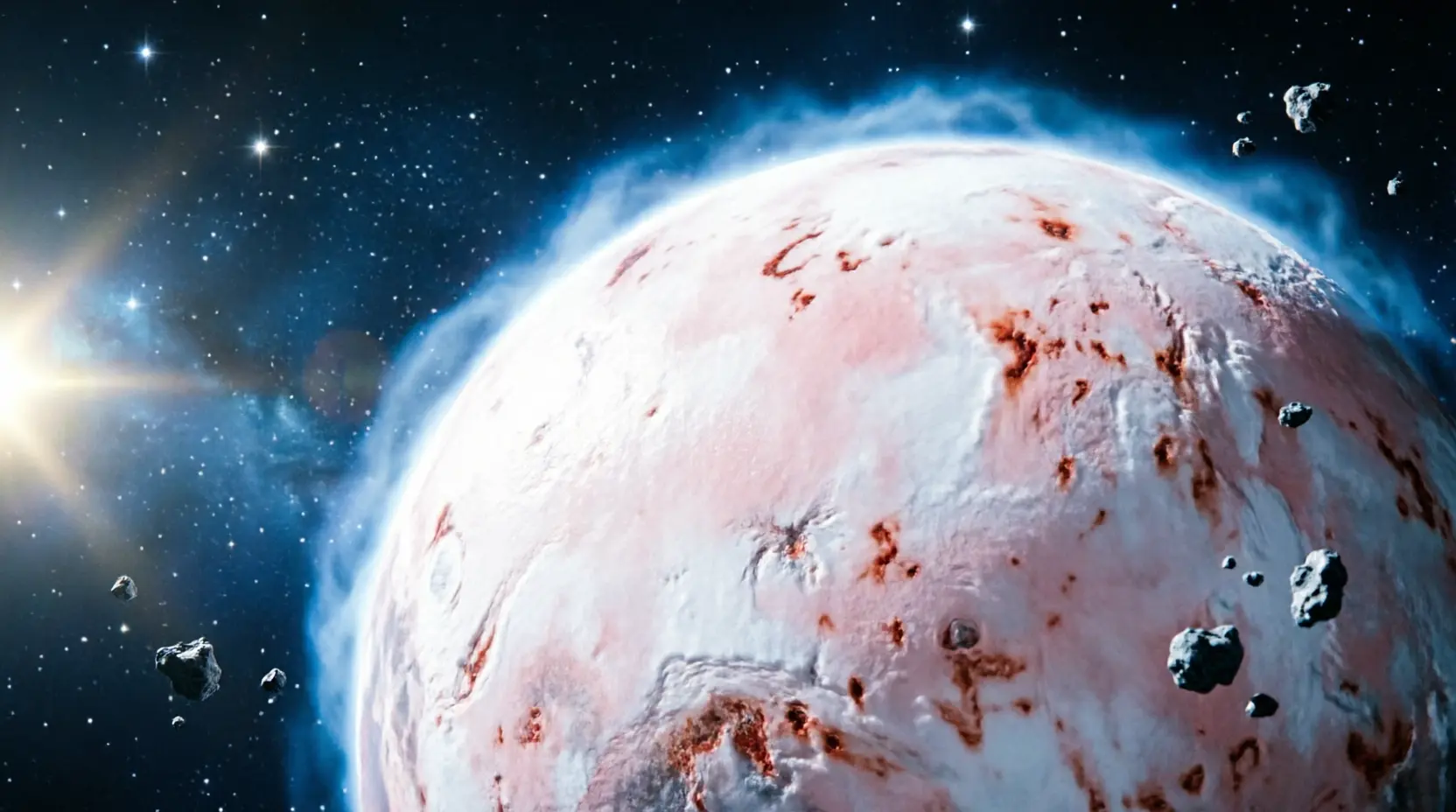
When we think of dwarf planets, Pluto usually steals the spotlight. However, the outer solar system is home to other fascinating worlds that are just as intriguing. One of these is Makemake, a bright icy world located in the distant Kuiper Belt. While it has been known since 2005, recent discoveries have completely changed how scientists understand this frozen celestial body.
For readers of Space Made Simple, here is everything you need to know about the latest amazing findings on Makemake, explained without the complicated jargon.
A Groundbreaking Discovery in 2025
For years, astronomers believed Makemake was essentially a barren ball of ice with little to no atmosphere. That assumption changed dramatically in late 2025. Using the powerful James Webb Space Telescope, researchers detected clear evidence of gaseous methane above the surface.
This discovery was a massive surprise. Makemake orbits about 53 times farther from the Sun than Earth does, making it incredibly cold. Scientists previously thought any methane would be permanently frozen solid. The presence of gas suggests that Makemake might have localized active regions or "plumes" releasing vapor into space, similar to geysers but made of hydrocarbons instead of water. This makes Makemake one of the most dynamic objects in the trans-Neptunian region.
A Surface Covered in Methane Snow
Even before the atmospheric discovery, Makemake was known for its unique surface composition. It is one of the brightest objects in the Kuiper Belt, reflecting a significant amount of sunlight due to its fresh coat of frozen methane and ethane ice.
Unlike the smooth plains seen on some planetary bodies, Makemake’s surface may feature unusual textures. Some models suggest the existence of methane snow pellets roughly the size of marbles resting on the ground. These frozen grains create a highly reflective landscape that appears reddish-brown when viewed through telescopes, caused by complex organic molecules called tholins formed by solar radiation hitting the ice over billions of years.
The Dark and Elusive Moon MK2
Another amazing aspect of Makemake is its tiny moon, officially designated S/2015 (136472) 1 but commonly known as MK2. Discovered by the Hubble Space Telescope in 2016, this satellite is exceptionally difficult to observe because it is extremely dark compared to the brilliant white surface of Makemake itself.
MK2 orbits very close to its parent body, which initially made it nearly impossible to spot against the glare of the dwarf planet. Studying this small moon is crucial because its orbit allows scientists to calculate Makemake's mass and density accurately. Current data suggests Makemake has a density similar to Pluto, indicating a rocky core surrounded by a thick mantle of water ice and volatile compounds. You can explore more visual details about this system via NASA’s official dwarf planet profile.
Why Makemake Matters to Us
You might wonder why we should care about a frozen rock billions of miles away. Makemake serves as a pristine time capsule from the early days of our solar system. Because it resides so far from the Sun, it has remained largely unchanged for 4.5 billion years.
The unexpected detection of an atmosphere challenges our existing models of how icy worlds evolve. It proves that even in the deepest freeze of space, geological or chemical processes can still occur. As highlighted in recent coverage by Phys.org, these findings open new questions about whether other distant Kuiper Belt objects might also harbor hidden atmospheres waiting to be discovered.
Understanding Makemake helps us piece together the puzzle of planetary formation and reminds us that the universe is full of surprises, no matter how cold or distant they may seem.