Europa Clipper Part 1: Why This Icy Moon Could Hide Alien Oceans
Discover why Jupiter's moon Europa is NASA's top target for finding alien life. Learn about its hidden subsurface ocean in simple terms. Part 1 of our Europa Clipper series.
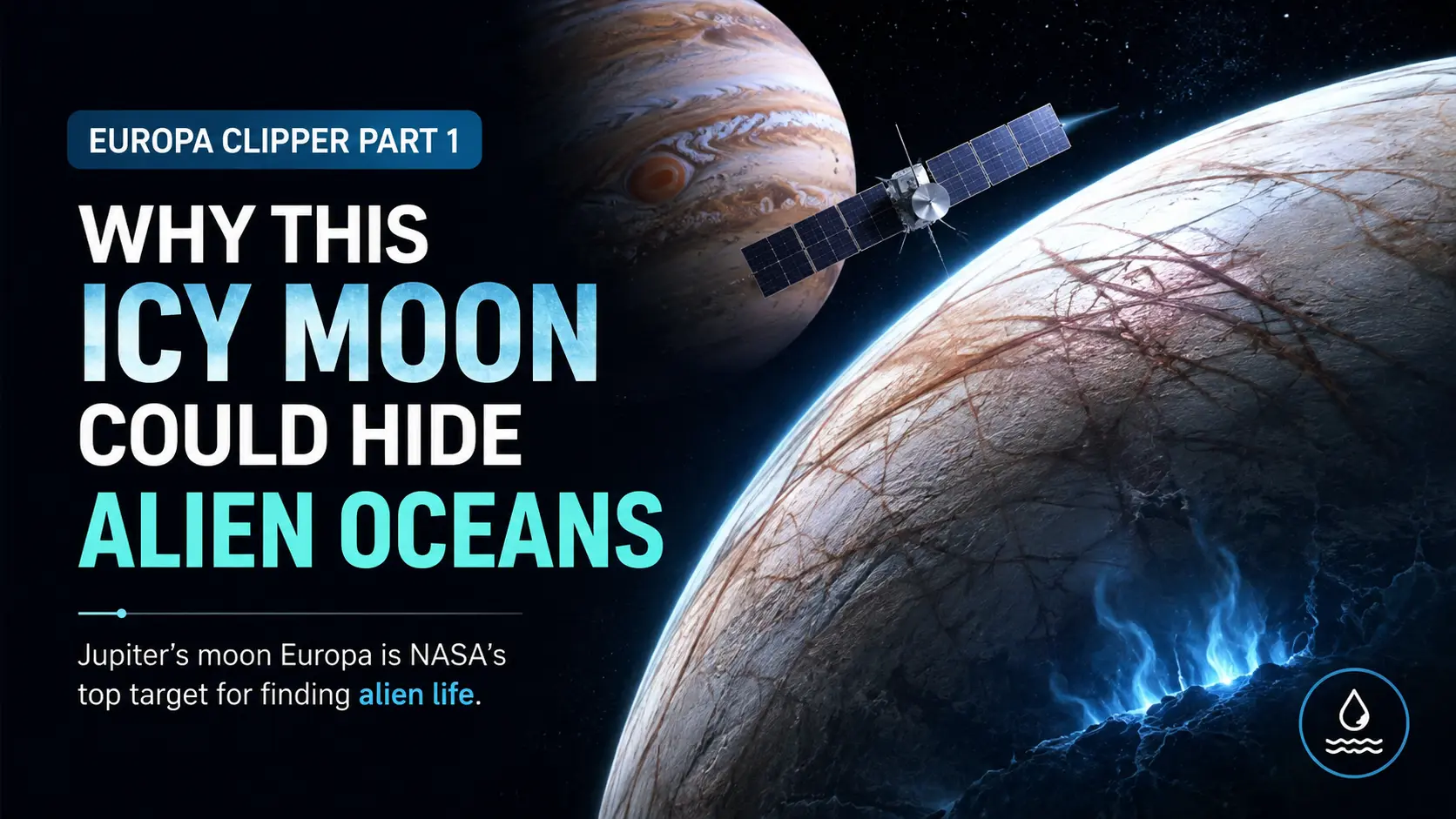
When we search for life beyond Earth, Mars usually steals the spotlight. But deep in the outer solar system, a frozen moon named Europa might be hiding something far more promising: a vast, salty ocean beneath its icy shell. This is exactly why NASA sent the Europa Clipper mission to investigate. In this first part of our series, we will explore what makes Europa so special and why scientists believe it could harbor conditions suitable for life.
A World Covered in Ice
Europa is one of Jupiter’s four largest moons, known as the Galilean satellites. From space, it looks like a smooth, cracked billiard ball with very few craters. This lack of craters tells us something important: Europa’s surface is young and constantly being renewed. Unlike our Moon, which has been geologically dead for billions of years, Europa is active.
The surface temperature averages around -160°C (-260°F), making the ice as hard as granite. Yet, those distinctive brownish cracks and ridges suggest that warmer material from below occasionally pushes through or reshapes the surface. This geological activity is our first clue that something dynamic is happening underneath.
The Hidden Ocean Beneath
So, how do we know there is an ocean if we cannot see through the ice? Scientists have pieced together evidence from multiple sources:
- Magnetic Field Data: When the Galileo spacecraft flew by Europa in the 1990s, it detected a weak magnetic field that changed in response to Jupiter’s powerful magnetosphere. The best explanation is a global layer of electrically conductive fluid—likely salty water—beneath the ice.
- Surface Features: Chaos terrains, where ice blocks appear jumbled and refrozen, resemble Antarctic ice shelves floating over liquid water on Earth.
- Plume Observations: Hubble Space Telescope images have captured transient water vapor plumes erupting from Europa’s south pole, suggesting direct interaction between the subsurface reservoir and space.
Current estimates suggest Europa’s ocean contains roughly twice the volume of all Earth’s oceans combined, despite the moon being smaller than our own Moon. The ice shell above it is likely 15 to 25 kilometers thick, acting as both a shield and a barrier.
Why Liquid Water Can Exist So Far From the Sun
At Jupiter’s distance, sunlight is too weak to keep water liquid. The answer lies in tidal heating. Europa orbits Jupiter in a slightly elliptical path, and gravitational tugs from Jupiter and neighboring moons Io and Ganymede stretch and squeeze the moon’s interior. This constant flexing generates friction and heat, much like bending a paperclip repeatedly warms it up.
This internal heat keeps the subsurface ocean from freezing solid and may also drive hydrothermal vents on the ocean floor—similar to those found in Earth’s deep seas that support entire ecosystems without sunlight. On Earth, these vents are considered possible analogs for where life first emerged.
What Makes Europa Habitable?
For astrobiologists, habitability requires three key ingredients: liquid water, chemical building blocks, and an energy source. Europa appears to have all three:
- Liquid Water: Confirmed indirectly through multiple lines of evidence.
- Chemistry: Radiation processing of surface ice produces oxidants like hydrogen peroxide and oxygen, which could mix into the ocean through convection or plume activity. Salts detected on the surface hint at a chemically rich interior.
- Energy: Tidal heating provides sustained thermal energy, while potential seafloor vents offer chemical energy gradients that microbes could exploit.
Importantly, Europa’s ocean is thought to be in contact with a rocky mantle, unlike Saturn’s moon Enceladus whose ocean may be sandwiched between ice layers. Rock-water interaction allows essential minerals and nutrients to dissolve into the water, further enhancing its potential habitability.
Setting the Stage for Exploration
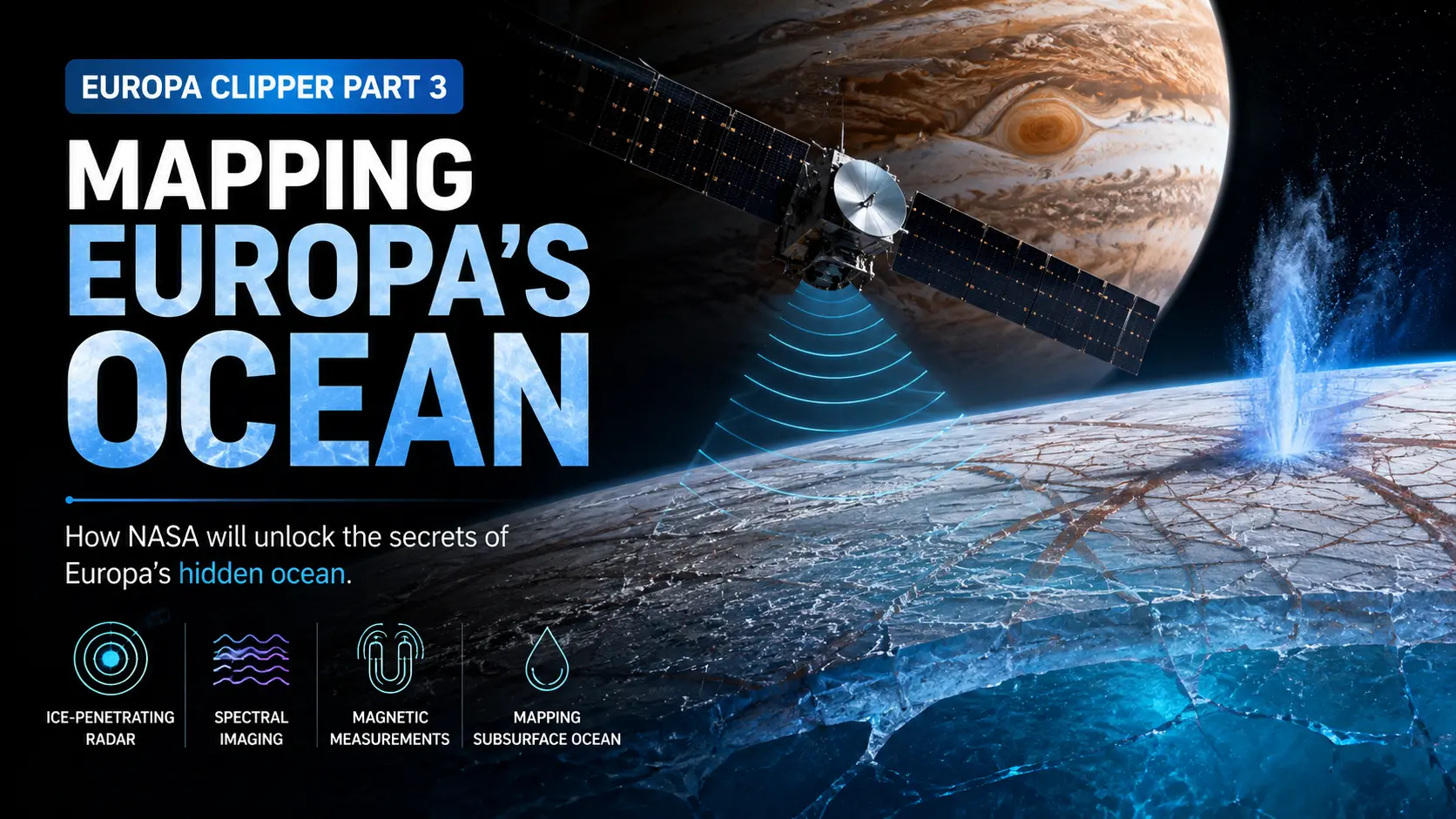
Understanding Europa’s ocean is only the beginning. Knowing that an ocean exists is different from knowing what is in it. That is precisely the goal of the Europa Clipper mission, which launched in late 2024 and is scheduled to arrive at Jupiter in April 2030. During its prime mission, it will conduct nearly 50 close flybys of Europa, using advanced instruments to probe the ice thickness, map the ocean’s extent, and analyze surface composition.
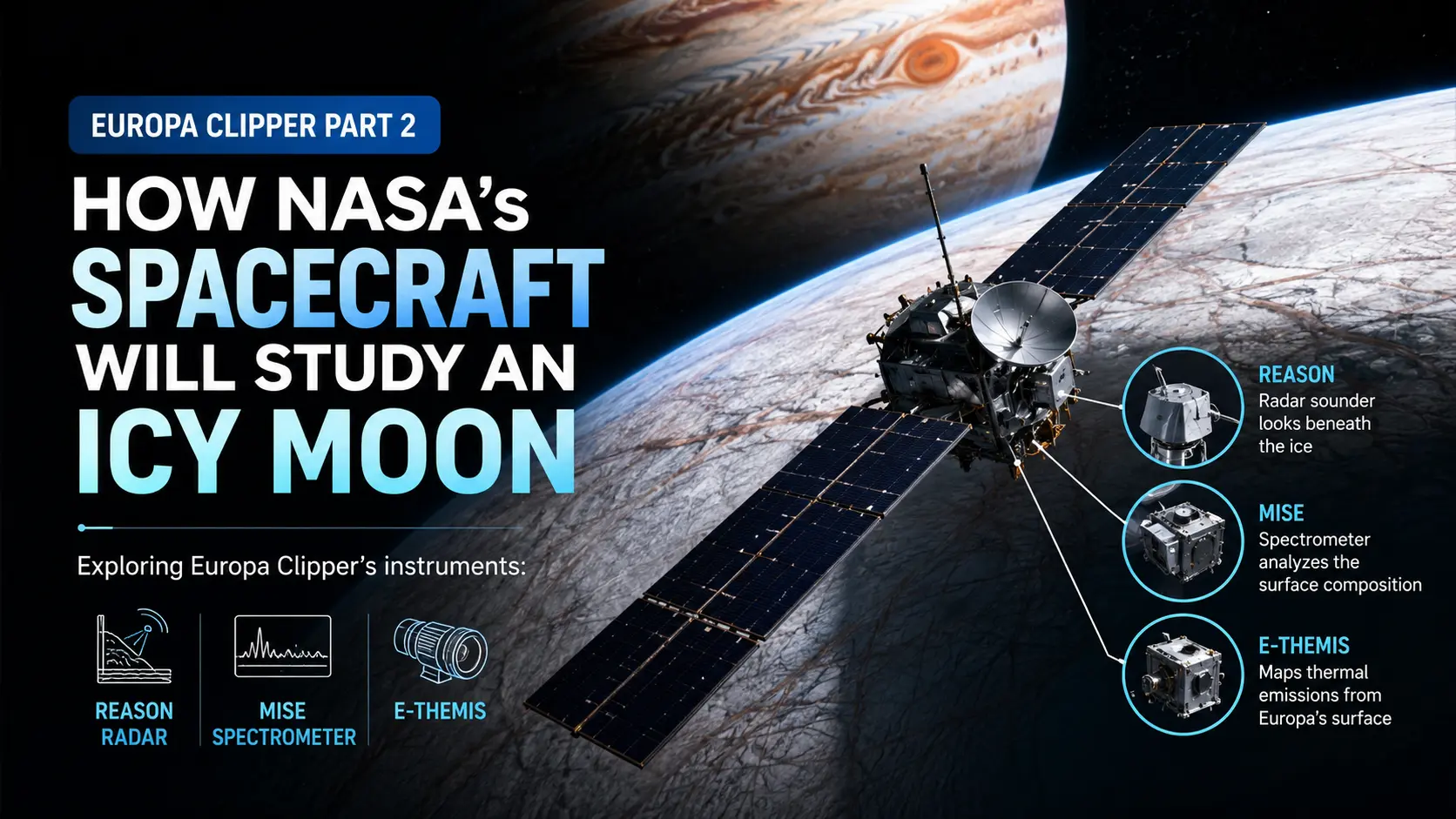
In Part 2 of this series, we will break down exactly how Europa Clipper’s instruments work and what they hope to discover during each flyby. For now, remember this: Europa is not just another icy moon. It is arguably the most accessible ocean world in our solar system, and within a decade, we may finally learn whether its hidden waters are truly alive.
For more context on why ocean worlds matter in the search for life, check out NASA’s official Ocean Worlds exploration program. You can also explore detailed mission updates directly from the Europa Clipper mission website to follow along as new data arrives.