Europa Clipper Part 2: How NASA’s Spacecraft Will Study an Icy Moon
Explore how Europa Clipper’s instruments work using simple analogies. Learn about REASON radar, MISE spectrometer, and E-THEMIS in Part 2 of our Astrobiology series.
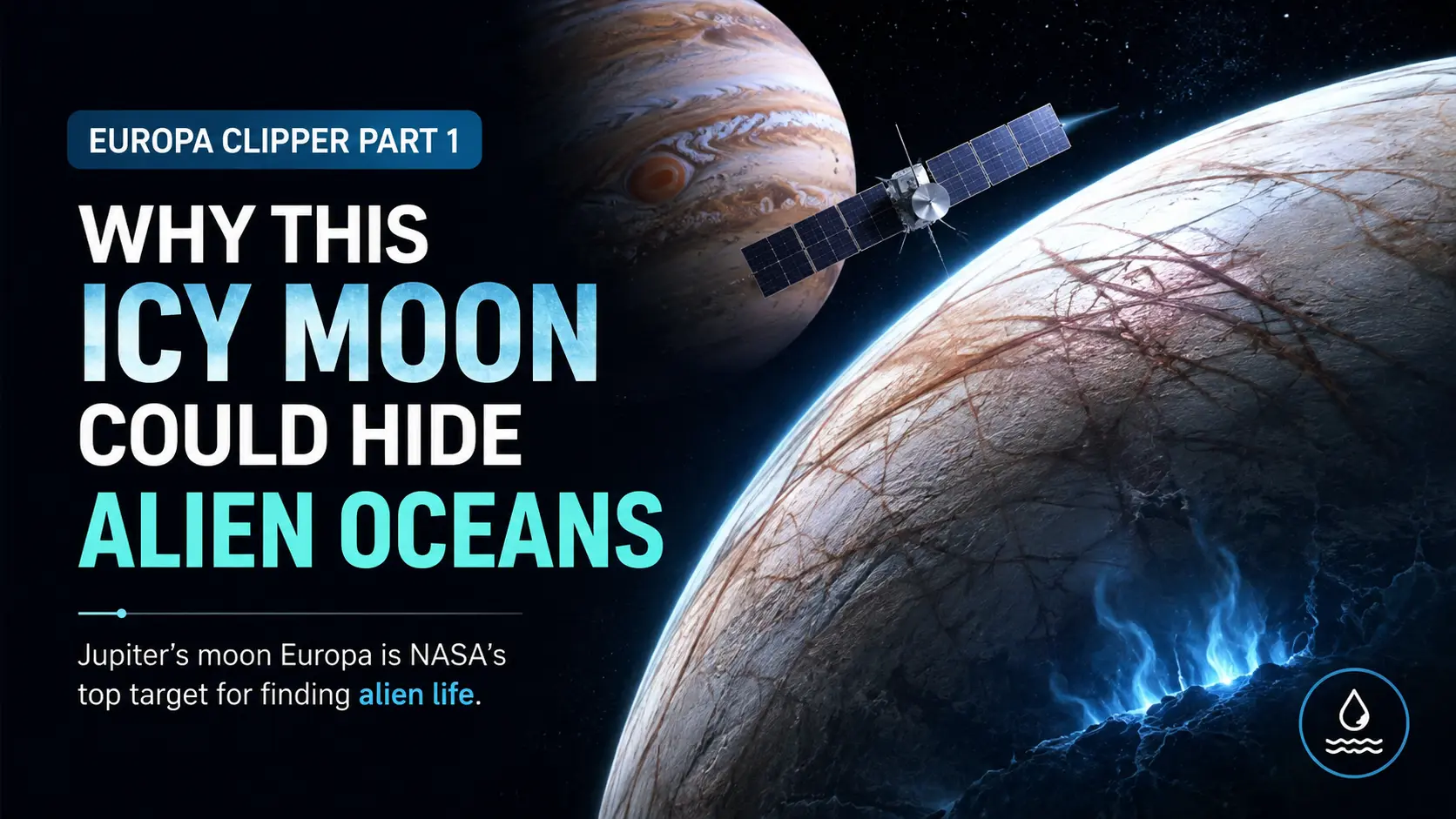
In Part 1 of this series, we explored why Jupiter’s moon Europa is a prime candidate for hosting alien life. Now it is time to meet the detective sent to investigate: the Europa Clipper spacecraft. Scheduled to arrive at Jupiter in April 2030, this orbiter carries nine sophisticated instruments designed to probe Europa’s ice, ocean, and potential habitability. But how do these tools actually work? Let us break them down using everyday analogies so anyone can understand what makes this mission so groundbreaking.
Why Flybys Instead of Orbiting Europa?
You might wonder why Europa Clipper will perform nearly 50 close flybys rather than orbiting Europa directly. The answer lies in Jupiter’s intense radiation belts. Prolonged exposure would quickly fry sensitive electronics. By looping far out between encounters, the spacecraft stays safe while still gathering high-resolution data during brief, targeted passes as close as 25 kilometers above the surface. Each flyby is like taking a detailed snapshot instead of leaving a camera running continuously in harsh conditions.
REASON Radar: Seeing Through Ice Like Medical Ultrasound
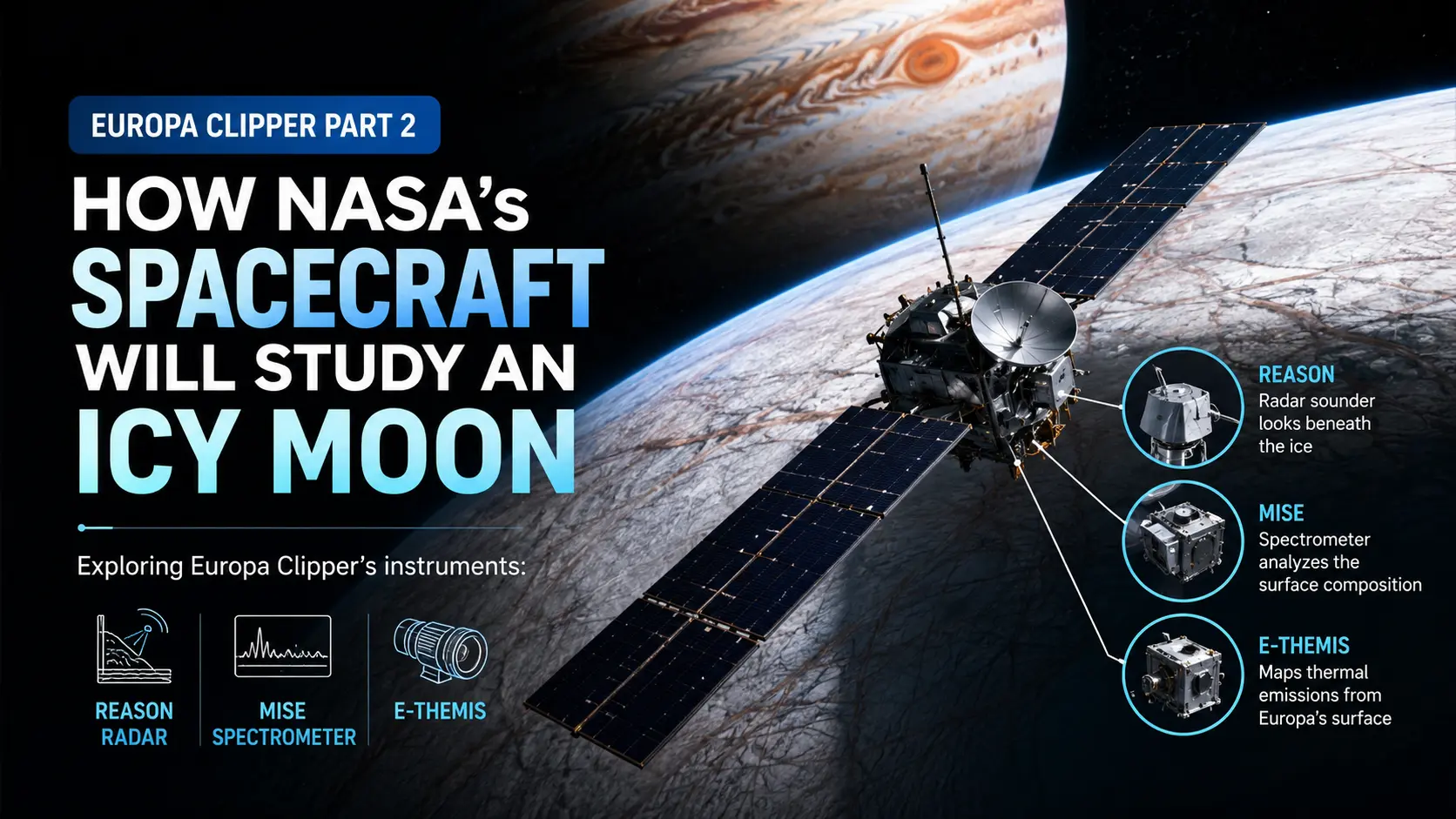
The Radar for Europa Assessment and Sounding: Ocean to Near-surface (REASON) instrument is perhaps the most critical tool for confirming the ocean’s existence and measuring ice shell thickness. Think of it as a medical ultrasound machine, but scaled up for planetary science.
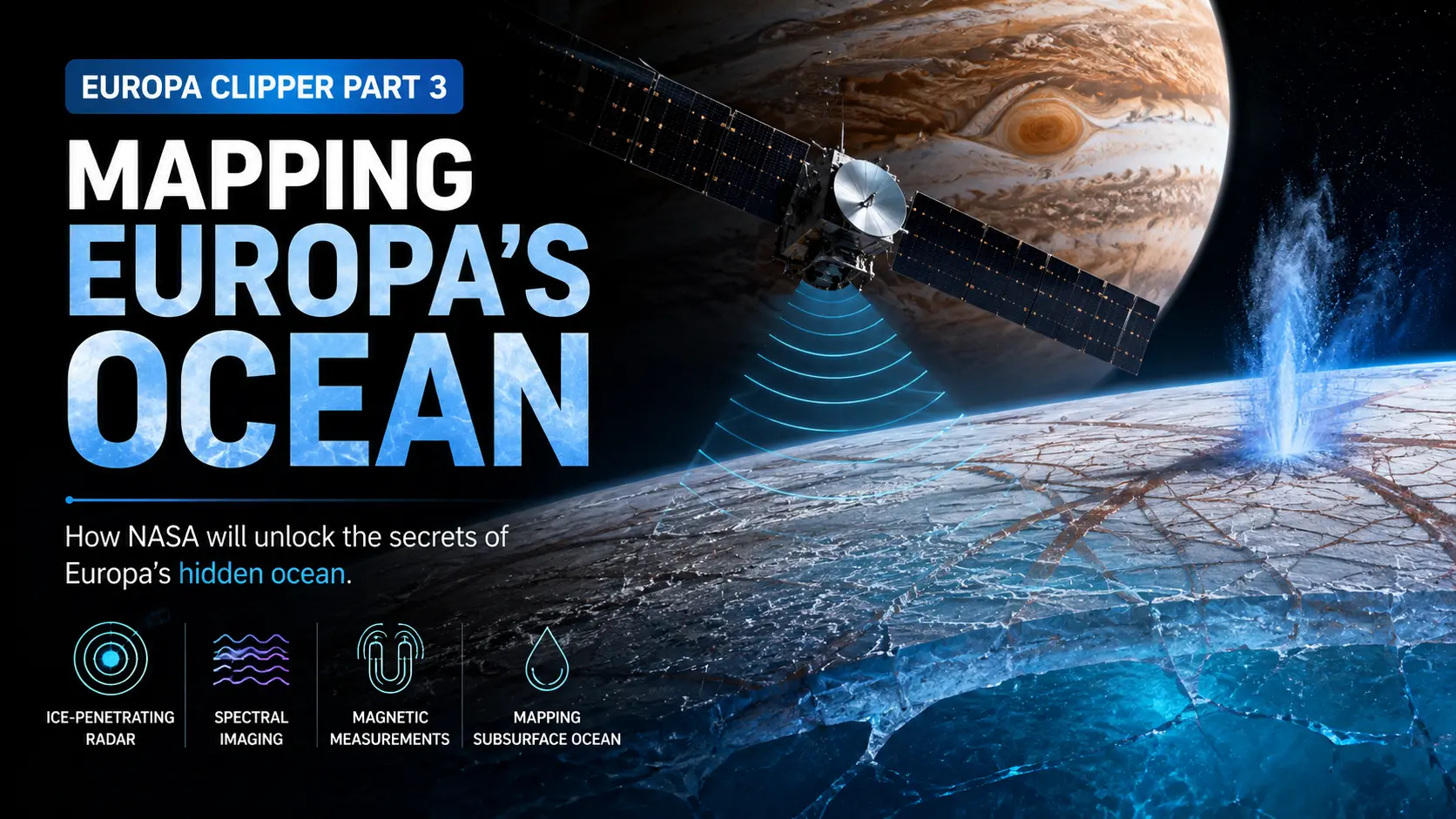
REASON sends radio waves that penetrate ice up to several kilometers deep. When these waves hit boundaries between different materials—such as ice over liquid water—they bounce back with distinct signatures. By analyzing return signals, scientists can map subsurface layers, detect pockets of liquid water within the ice, and estimate total ice thickness. This helps determine whether the ocean is truly accessible or buried under tens of kilometers of solid ice.
MISE Spectrometer: Identifying Surface Chemistry Like a Barcode Scanner
The Mapping Imaging Spectrometer for Europa (MISE) works similarly to barcode scanners at grocery stores, but instead of reading product codes, it identifies chemical compositions by analyzing reflected light. Different molecules absorb and reflect specific wavelengths of infrared light, creating unique spectral fingerprints.
During each flyby, MISE scans Europa’s surface to detect salts, organic compounds, hydrated minerals, and potential biosignatures. If plumes deposit fresh material from below onto the surface, MISE could spot telltale signs of ocean chemistry without needing to drill through ice. This instrument also helps select future landing sites by identifying regions where subsurface material may be exposed.
E-THEMIS Thermal Camera: Finding Warm Spots Like Night Vision Goggles
The Europa Thermal Emission Imaging System (E-THEMIS) detects heat emitted from Europa’s surface, functioning much like night vision goggles that reveal warm objects in darkness. While Europa is extremely cold overall, localized warm spots could indicate recent geological activity, thin ice regions, or even active plume sources.
By mapping temperature variations across the surface, E-THEMIS helps identify areas where the ice shell might be thinner or where internal heat escapes. These thermal anomalies are high-priority targets because they offer the best chances of sampling ocean-derived material during flybys.
Other Key Instruments Working Together
While REASON, MISE, and E-THEMIS form the core investigation suite, four other instruments provide essential context:
- Europa Ultraviolet Spectrograph (EUVS): Analyzes atmospheric composition and plume activity by studying ultraviolet light absorption.
- Europa Imaging System (EIS): Captures high-resolution visible-light images to study surface geology and track changes over time.
- Europa Clipper Magnetometer (ECM): Measures magnetic field perturbations to refine ocean depth and salinity estimates.
- Plasma Instrument for Magnetic Sounding (PIMS): Characterizes plasma environment around Europa to separate external magnetic effects from internal ocean signals.
- Mass Spectrometer for Planetary Exploration (MASPEX): Directly samples gas and dust particles near Europa to analyze atmospheric and plume composition.
These instruments operate simultaneously during flybys, cross-validating findings to build a comprehensive picture. For example, if MASPEX detects salt-rich particles while MISE identifies corresponding surface deposits and REASON maps shallow ice beneath, confidence in ocean accessibility increases dramatically.
Engineering Challenges Beyond Science
Building a spacecraft for Europa required solving unique engineering problems. Radiation-hardened electronics protect against Jupiter’s deadly particle environment. Large solar panels power the craft despite dim sunlight at Jupiter’s distance. Precise navigation systems enable autonomous targeting during fast-moving flybys when real-time commands from Earth are impossible due to communication delays.
Additionally, planetary protection protocols ensure Europa Clipper does not accidentally contaminate Europa with Earth microbes. The spacecraft was assembled in clean rooms, and its trajectory avoids direct impact with Europa to preserve the moon’s pristine environment for future exploration.
What Comes Next After Arrival?
Once Europa Clipper enters Jovian orbit in 2030, it will spend months calibrating instruments and adjusting trajectories before beginning science operations. Prime mission duration spans approximately three years, though extended missions may follow depending on spacecraft health and scientific returns.
Data transmission back to Earth occurs via NASA’s Deep Space Network, with processing pipelines converting raw measurements into interpretable datasets. Initial results could emerge within months of arrival, potentially reshaping our understanding of ocean worlds long before the final flyby.
For deeper technical details on instrument specifications, visit the official Europa Clipper instruments page. You can also explore how similar technologies are used in Earth observation through NOAA’s spectrometer applications guide to better appreciate the versatility of remote sensing techniques.
In Part 3 of this series, we will discuss what discoveries would truly change everything—from detecting amino acids to interpreting ambiguous signals—and why false positives remain a major concern in astrobiology.