Europa Clipper Part 3: What Finding Life on Europa Would Mean
What if Europa Clipper finds signs of life? Explore biosignatures, false positives, and the profound implications of discovering alien oceans in Part 3 of our series.
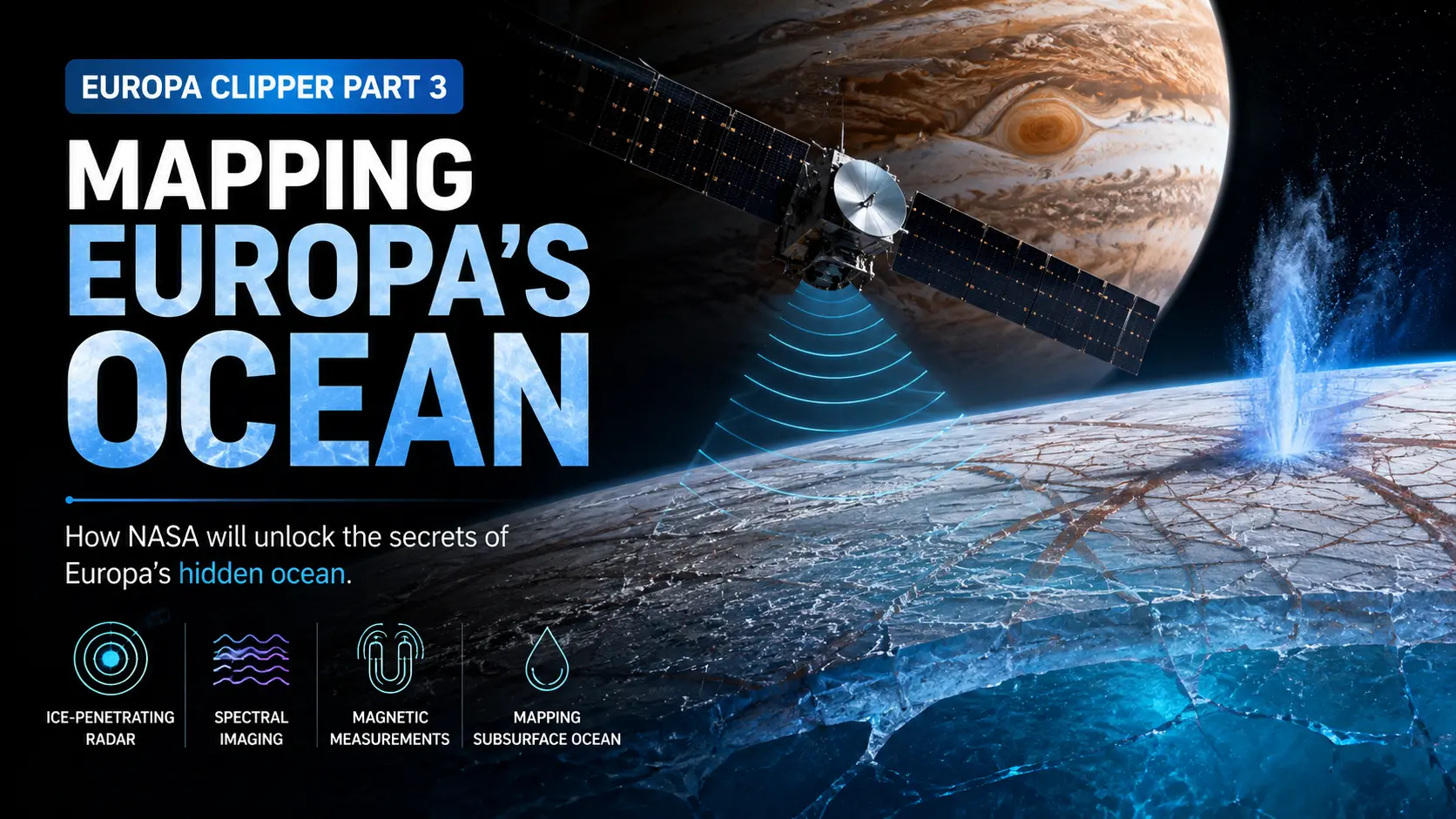
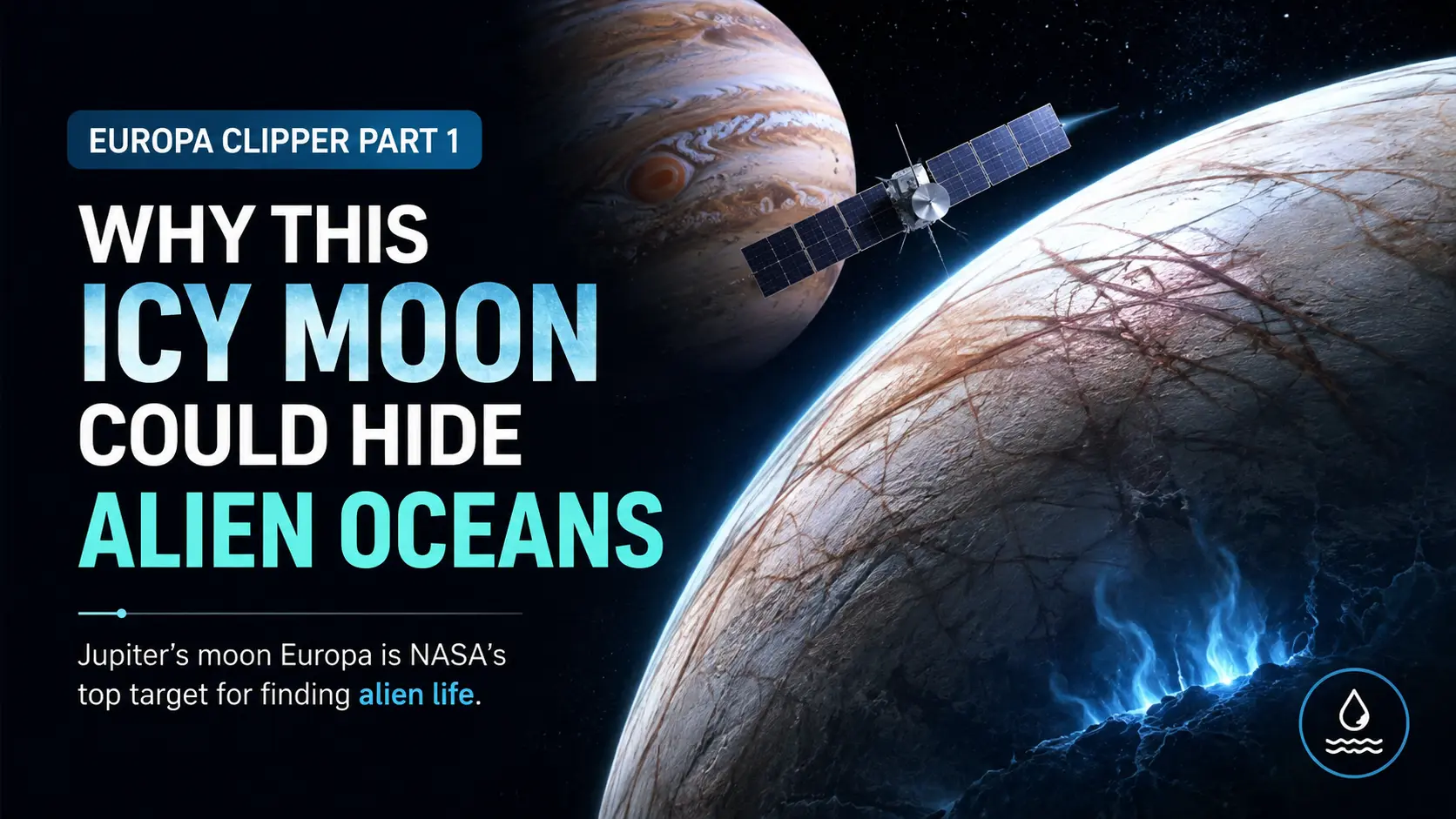
We have explored why Europa’s hidden ocean makes it a top target for astrobiology in Part 1, and examined how the spacecraft’s instruments will search for clues in Part 2. Now we arrive at the ultimate question: what would actually constitute evidence of life, and why is distinguishing real biology from geological mimicry so challenging? This final installment explores the science of biosignatures, the risk of false positives, and the profound implications if Europa Clipper succeeds where all previous missions have not.
Defining Biosignatures Beyond "Little Green Men"
When scientists talk about finding life on Europa, they are not expecting to photograph swimming creatures. Instead, they seek biosignatures: measurable indicators that suggest past or present biological activity. These fall into three main categories relevant to Europa Clipper’s capabilities:
- Chemical Biosignatures: Specific molecular patterns unlikely to form through abiotic processes alone. Examples include amino acids with consistent handedness (homochirality), complex organic molecules with biological ratios, or isotopic fractionation patterns characteristic of metabolism.
- Spectral Biosignatures: Light absorption features in surface or plume material that match known biological pigments or metabolic byproducts. While less definitive than direct sampling, these can guide prioritization of high-value targets.
- Contextual Biosignatures: Geological or environmental settings strongly associated with habitability, such as hydrothermal vent analogs, redox gradients, or mineral assemblages formed only in biologically active systems.
Crucially, no single measurement proves life. Confidence comes from multiple independent lines of evidence converging on a biological explanation while ruling out non-biological alternatives.
The False Positive Problem: When Geology Mimics Biology
Europa’s environment presents unique challenges for unambiguous detection. Several abiotic processes could produce signals resembling biosignatures:
- Radiolysis and Photolysis: Jupiter’s intense radiation breaks apart surface ice molecules, creating oxidants and simple organics that might be mistaken for biological products when mixed into the ocean via convection.
- Serpentinization: Water-rock reactions in Europa’s seafloor generate hydrogen and methane—gases often associated with microbial metabolism on Earth—but also occur purely geochemically.
- Fischer-Tropsch Synthesis: Abiotic catalytic reactions can produce complex hydrocarbons similar to those made by living organisms, especially under high-pressure, low-temperature conditions expected in Europa’s interior.
- Contamination Risks: Despite strict planetary protection protocols, trace terrestrial organics from spacecraft materials could theoretically interfere with sensitive mass spectrometry readings.
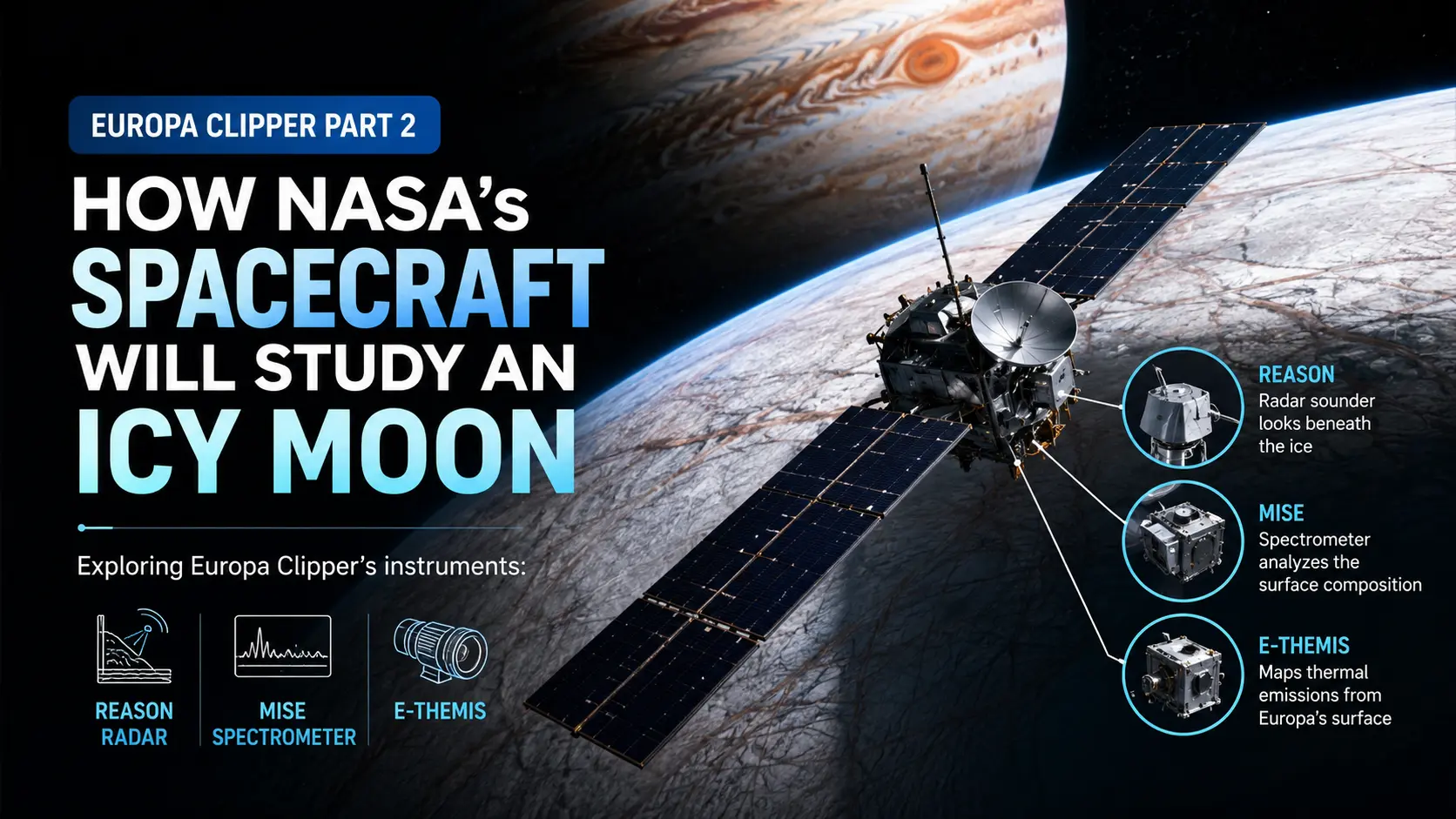
To address this, Europa Clipper’s instrument suite was designed for cross-validation. If MASPEX detects amino acids, MISE should simultaneously map their spatial distribution relative to geological features. If REASON identifies shallow liquid pockets, E-THEMIS should check for correlated thermal anomalies. Only when chemistry, geology, and physics align does confidence rise above ambiguous thresholds.
Thresholds of Evidence: From Intriguing to Compelling
The astrobiology community has developed frameworks for evaluating potential biosignature detections. A useful mental model involves four tiers of confidence:
- Anomalous Signal: Measurement deviates from expected abiotic baselines but lacks corroborating data. Warrants further investigation but cannot support biological claims.
- Plausible Biological Interpretation: Signal matches known biosignature profiles AND occurs in habitable context, yet viable abiotic explanations remain. Represents strongest possible outcome for Europa Clipper given its remote sensing nature.
- Robust Biosignature: Multiple independent instruments confirm signal, abiotic alternatives are quantitatively ruled out, and results are reproducible across different flybys/locations. Likely requires follow-up lander mission for confirmation.
- Definitive Proof: Direct observation of cellular structures, genetic material, or active metabolism. Beyond Europa Clipper’s scope but represents long-term goal for future missions.
Realistically, Europa Clipper aims for Tier 2 outcomes. Even achieving this would revolutionize planetary science by demonstrating that ocean worlds beyond Earth possess prebiotic chemistry or potentially extant biology accessible to remote sensing.
Implications Beyond Europa: Reshaping Cosmic Perspective
Confirming even tentative biosignatures on Europa would trigger cascading scientific and philosophical shifts:
- Life’s Ubiquity: If life emerged independently in our own solar system, the probability of widespread cosmic life increases dramatically. Current estimates based solely on Earth become severe underestimates.
- Alternative Biochemistries: Europa’s cold, high-pressure, radiation-exposed environment differs vastly from Earth’s. Any detected life would likely use different biochemical pathways, expanding our definition of habitability and informing exoplanet search strategies.
- Mission Prioritization: Positive results would accelerate funding for Europa landers, Enceladus orbiters, and Titan drones. Negative results would redirect focus toward other ocean world candidates or refine detection methodologies.
- Planetary Protection Evolution: Confirmed habitability would strengthen arguments for preserving ocean worlds as scientific reserves, influencing international space law and commercial exploration regulations.
- Cultural Impact: Unlike Mars rover discoveries that gradually accumulated over decades, a Europa biosignature announcement would represent a singular paradigm shift comparable to Copernican heliocentrism or Darwinian evolution in public consciousness.
Managing Expectations: Success Without Smoking Guns
It is vital to communicate that Europa Clipper can succeed scientifically without definitively proving life exists. Characterizing ocean salinity, mapping ice shell dynamics, identifying organic inventory, and constraining energy availability all advance understanding regardless of biological outcomes. Each dataset reduces uncertainty for future missions and refines models applicable to exoplanetary ocean worlds.
Conversely, null results carry equal value. Demonstrating that Europa’s ocean is sterile despite favorable conditions would force reevaluation of habitability assumptions and highlight missing variables in current theories. Science progresses through both confirmation and falsification.
Looking Ahead: The Next Decade of Ocean World Exploration
Europa Clipper represents one pillar of a broader ocean worlds exploration strategy. ESA’s JUICE mission, en route to Ganymede, will provide complementary data on neighboring icy moons. Proposed concepts like Europa Lander, Enceladus Orbilander, and Triton Explorer await selection based partly on Clipper’s findings. Ground-based telescopes and next-generation observatories will monitor plume activity and atmospheric changes between spacecraft visits.
For ongoing updates as new data emerges post-arrival, bookmark the Europa Clipper news hub. To understand how biosignature research connects to exoplanet studies, explore NASA’s Alien Worlds life detection framework. And for historical perspective on how past missions shaped current expectations, review the Galileo mission archive whose Europa flybys first hinted at the ocean we now seek to characterize.
Whether Europa harbors life remains unknown. But thanks to Europa Clipper, we will soon know far more than ever before about what lies beneath that ancient ice—and what that knowledge means for humanity’s place in the cosmos.