PDS 70c: Watching a Baby Planet and Its Moons Being Born
See how baby planet PDS 70c is growing and building moons in real-time. A simple visual guide to planet formation using JWST and ALMA images.
PDS 70c: Watching a Baby Planet and Its Moons Being Born
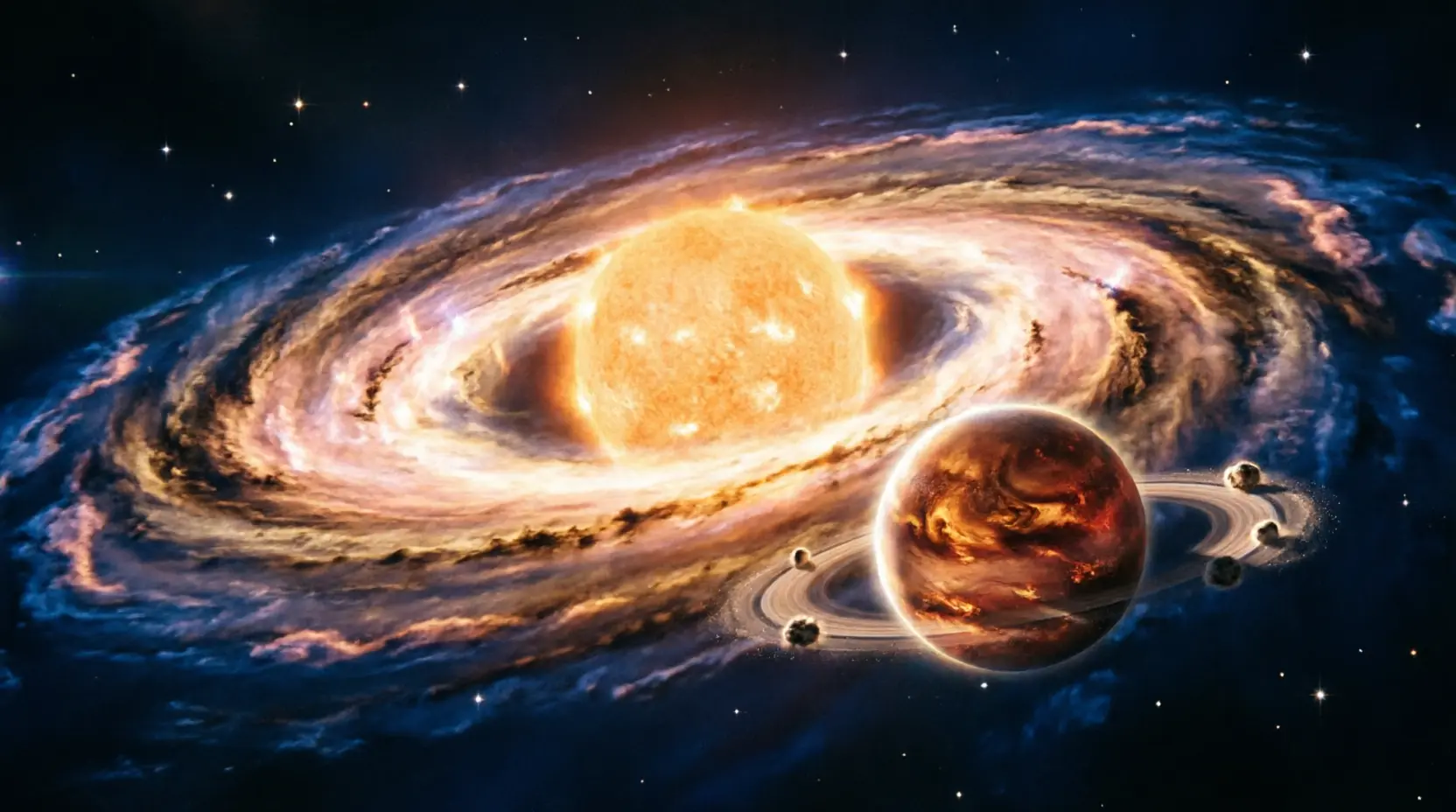
Most of the time, when we talk about exoplanets, we are looking at fully grown worlds. But what if we could actually watch a planet being born? Thanks to powerful telescopes like JWST and ALMA, astronomers are now doing exactly that with a young system called PDS 70. At the heart of this cosmic nursery is PDS 70c, a baby gas giant that is actively growing and even building its own moons right before our eyes.
The Cosmic Nursery
Located about 370 light-years away in the constellation Centaurus, PDS 70 is a very young star, only about 5 million years old. To put that in perspective, our own Sun is roughly 4.6 billion years old. PDS 70 is still surrounded by a vast, swirling disk of gas and dust known as a protoplanetary disk.
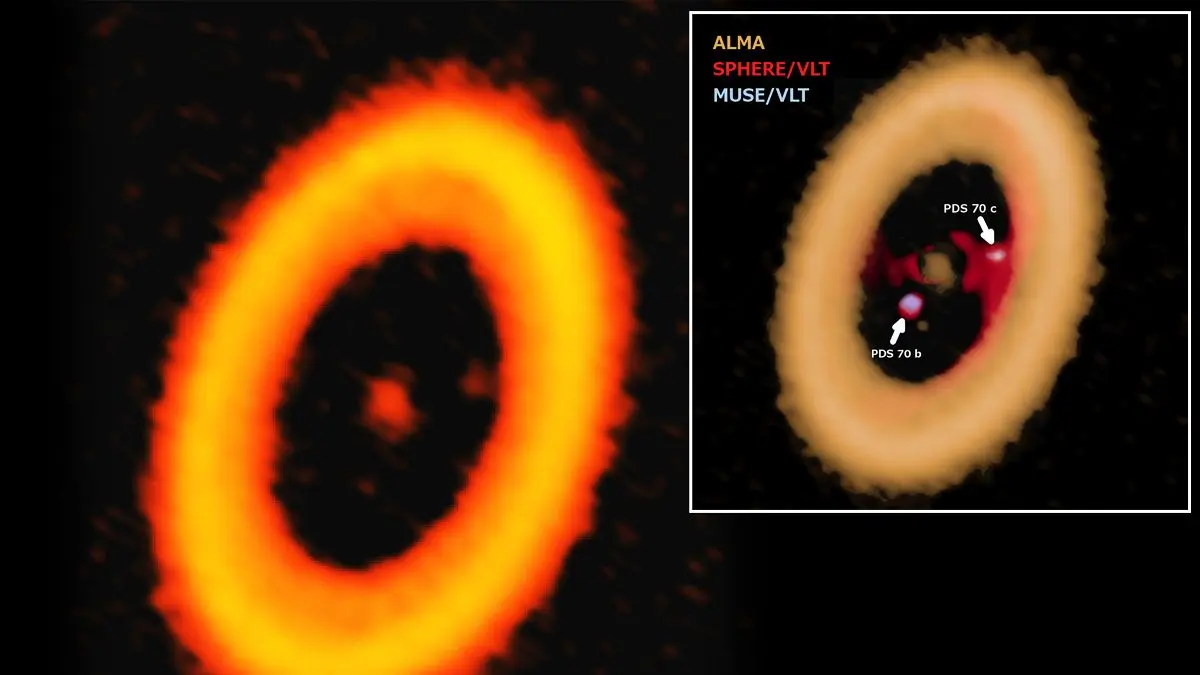
Think of this disk like a spinning pizza dough. As it rotates, clumps of material begin to stick together. Over time, these clumps carve out gaps in the disk as they sweep up matter. PDS 70c sits right at the outer edge of one of these gaps, roughly 34 astronomical units (AU) from its star, which is similar to Neptune’s distance from our Sun. This gap is the visual fingerprint of a planet in the making.
Watching PDS 70c Eat
The most exciting part of PDS 70c is not just that it exists, but that it is still feeding. Recent observations from the NASA Exoplanet Catalog confirm that this young world is a gas giant, likely several times more massive than Jupiter, and it is still actively pulling in gas from its surroundings.
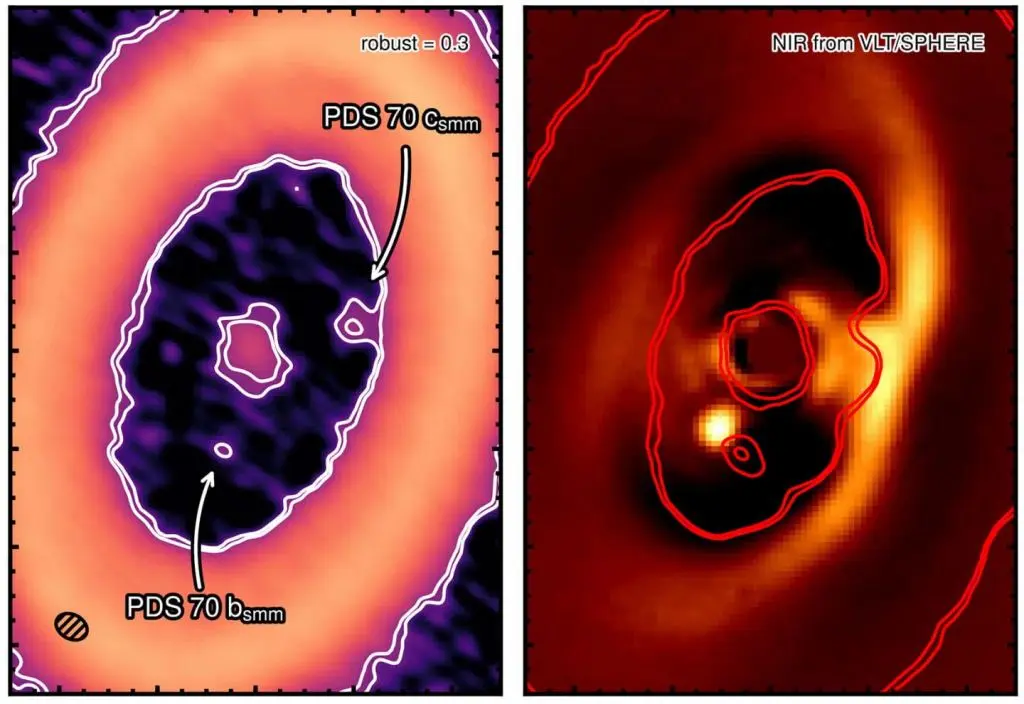
To understand this visually, imagine a drain in a bathtub. As water spirals down, it forms a miniature whirlpool around the opening. PDS 70c has its own personal whirlpool called a circumplanetary disk. This smaller disk of gas and dust orbits the baby planet itself, funneling material down onto its surface. When astronomers use infrared instruments on JWST or radio antennas on ALMA, they can actually see the glow of this hot, infalling material. It is the closest thing we have to a live video feed of planetary growth.
A Moon Factory in Action
That circumplanetary disk does more than just fatten up the planet. It also serves as a construction site for future moons. Just as planets form in the large disk around a star, moons form in the smaller disk around a planet.
Scientists have confirmed that the disk around PDS 70c is massive enough to spawn an entire system of satellites. In fact, the ALMA Observatory provided the first clear detection of such a moon-forming disk around an exoplanet. This means that while PDS 70c is still drinking gas to become a full-sized planet, it is simultaneously laying the foundation for its own miniature solar system. We are essentially watching the birth of a Jupiter-like planet and its Galilean moons happening at the same time.
Why This Matters for Us
You might wonder why we care about a baby planet hundreds of light-years away. The answer is simple: PDS 70c is showing us our own family album.
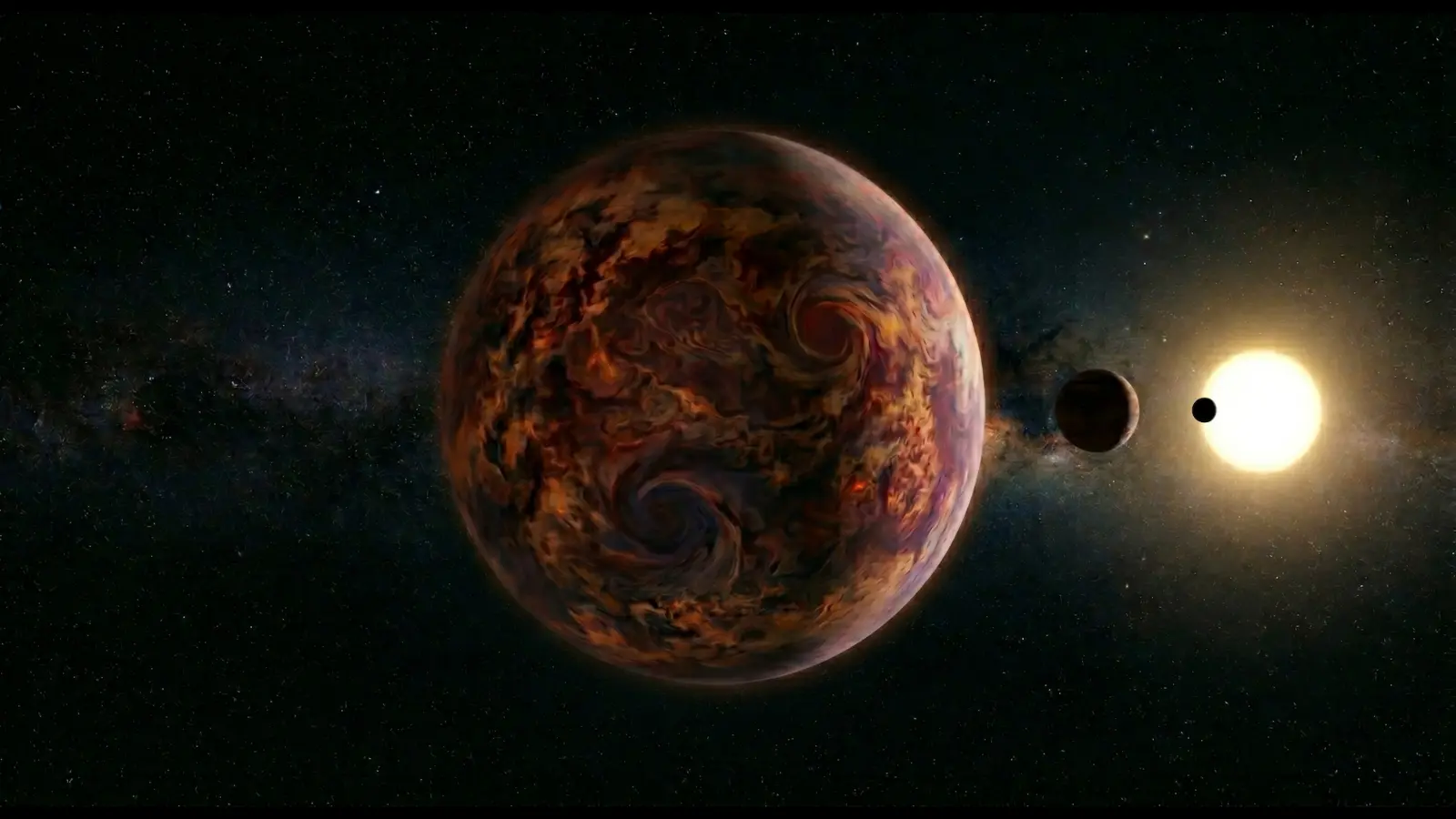
Billions of years ago, Jupiter and Saturn went through this exact same messy, chaotic phase. They had their own circumplanetary disks, and they built their dozens of moons in the same way. By studying PDS 70c today, we are effectively looking back in time to witness the childhood of our own solar system. It transforms abstract theories of planet formation into something tangible and observable.
What Comes Next
While the visual story of PDS 70c is already breathtaking, scientists are just getting started. New tracking data expected throughout 2026 will allow researchers to measure the planet's movement and atmospheric chemistry with unprecedented precision. In our next article, we will dive into those fresh scientific updates and explore what the latest numbers tell us about how giant planets truly grow. Stay tuned as we continue to make space simple.