What Is a Neutron Star? The Dead Star Denser Than Mount Everest
Neutron stars are not born; they are what remains after a violent death. Only the most massive stars, those at least eight times heavier than our Sun, have the potential to create one.
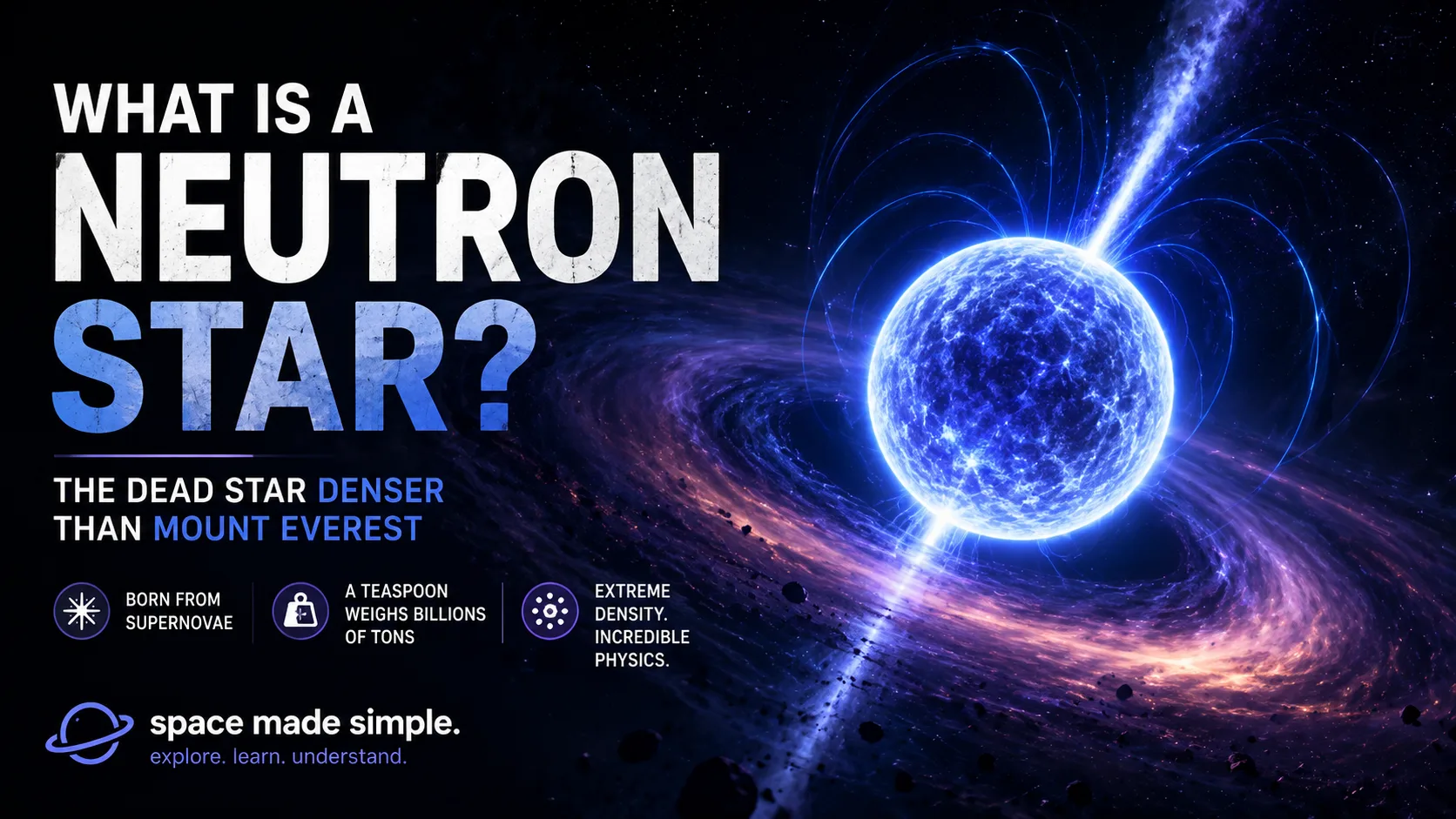
Imagine squeezing the entire mass of our Sun into a sphere no wider than a small city. The result is not a black hole, but something equally mind-bending: a neutron star. These cosmic remnants are the densest observable objects in the universe, where the laws of physics are pushed to their absolute limits. For readers of Space Made Simple, understanding neutron stars is the perfect next step after learning how stars die.
How Are Neutron Stars Born?
Neutron stars are not born; they are what remains after a violent death. Only the most massive stars, those at least eight times heavier than our Sun, have the potential to create one. When such a star exhausts its nuclear fuel, its core collapses under its own gravity in a fraction of a second. The outer layers rebound off this incredibly dense core and explode outward as a supernova.
What is left behind is a city-sized ball of pure neutrons. Recent breakthroughs in supercomputer simulations have finally allowed astronomers to model this birth process with unprecedented detail. These complex simulations reveal how the chaotic environment during a supernova shapes the newborn neutron star, including the formation of powerful jets that can influence its future behavior breakthrough in simulating neutron star formation. This confirms that a neutron star's properties are determined in the first moments of its explosive creation.
Mind-Bending Density Explained
The defining characteristic of a neutron star is its incomprehensible density. A single teaspoon of neutron star material would weigh about six billion tons on Earth—more than the combined weight of every human who has ever lived. This extreme density exists because the gravitational collapse was so powerful that it crushed protons and electrons together, leaving only neutrons packed as tightly as the nucleus of an atom.
You might wonder why it does not collapse further into a black hole. The answer lies in a quantum mechanical effect called neutron degeneracy pressure. This pressure acts as a final barrier against gravity, holding the star up. Scientists use specialized telescopes to measure the precise mass and radius of these objects to understand this state of matter. However, it is worth noting that NASA’s NICER mission, which provided crucial data on neutron star interiors, has had its science observations suspended since June 2025 due to a hardware anomaly NICER mission status update. Future measurements will be key to refining our models.
Not All Dead Stars Are the Same
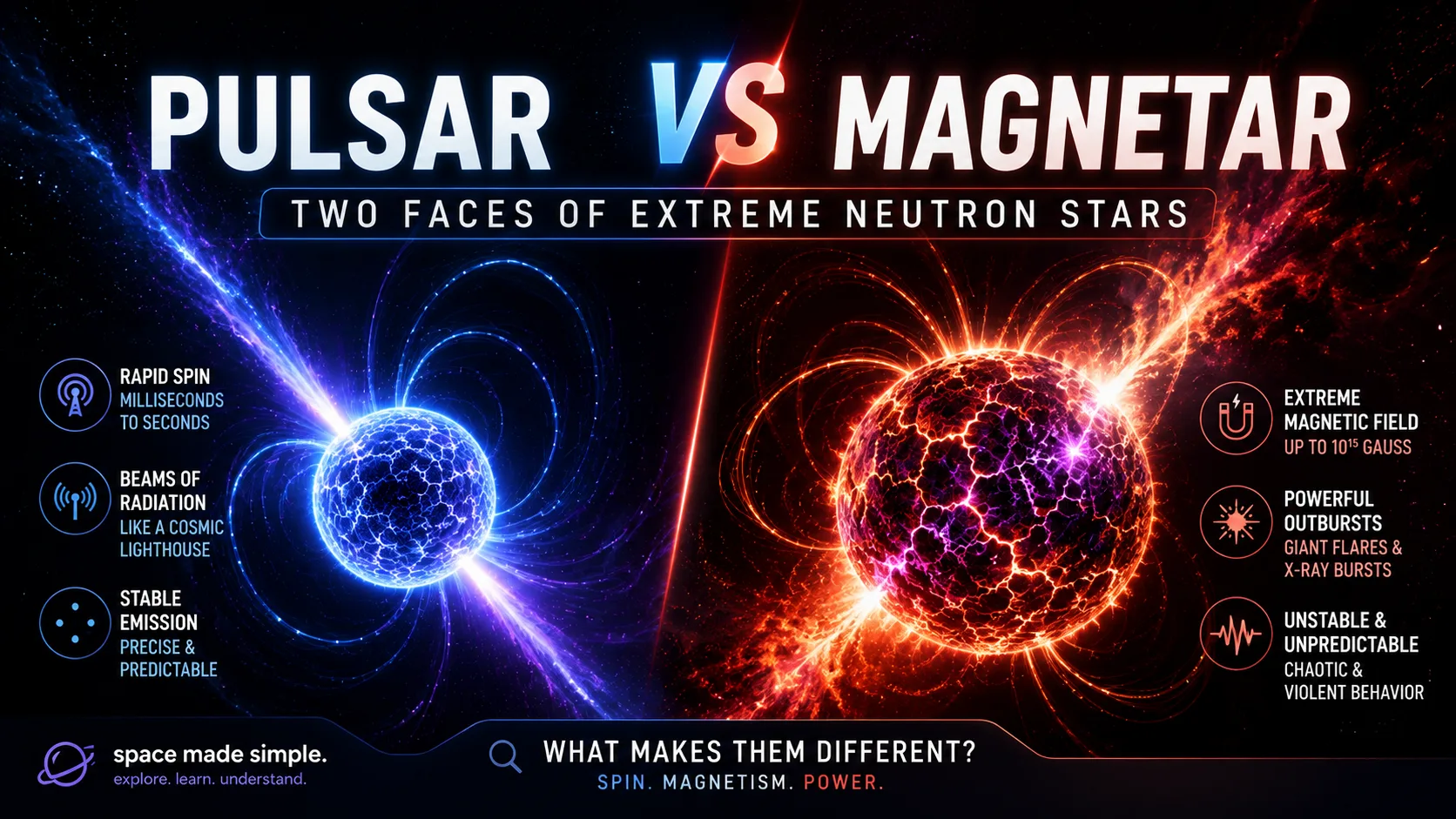
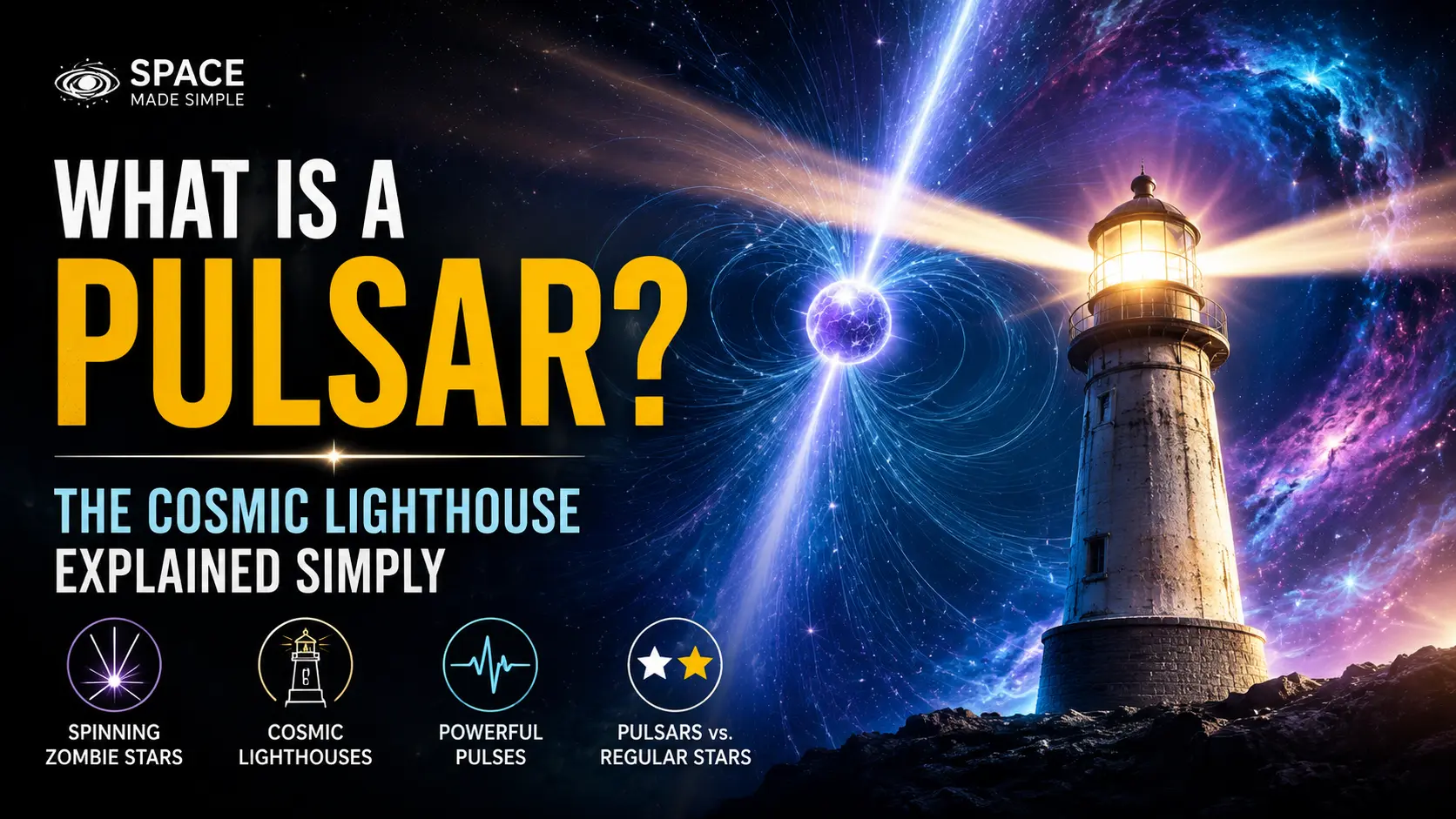
While all neutron stars share incredible density, they can behave in wildly different ways. Some spin rapidly and emit beams of radiation like a cosmic lighthouse; these are known as pulsars. If you are curious about them, our guide on what is a pulsar breaks down their fascinating mechanics. Others possess magnetic fields trillions of times stronger than Earth's, earning them the name magnetars.
Astronomers recently made history by directly observing the birth of a magnetar for the first time. This discovery confirmed that newborn magnetars can power exceptionally bright supernovae through a unique energy signature, proving that the diversity of neutron stars begins at the very moment of their creation. This finding sets the stage for our next article, where we will explore the extreme behaviors of pulsars and magnetars in detail.
Why Should You Care About Neutron Stars?
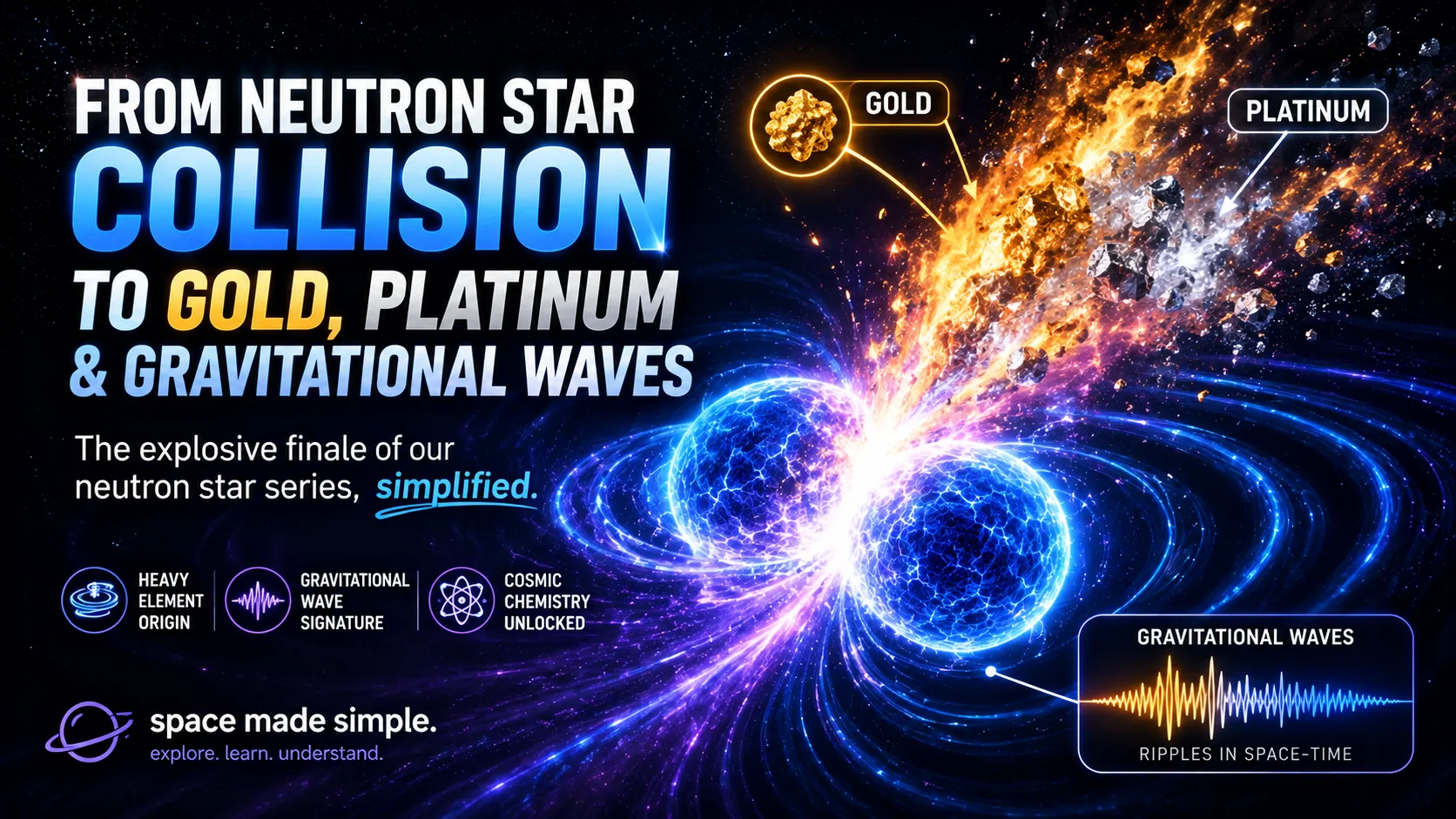
Neutron stars are more than just exotic curiosities. They serve as natural laboratories for testing physics under conditions impossible to recreate on Earth. By studying them, scientists gain insights into fundamental forces, the behavior of matter at its limits, and the origin of heavy elements in the universe.
Understanding the basics of what a neutron star is and how it forms provides the essential foundation for exploring their most extreme manifestations. In the next part of this series, we will dive deep into the bizarre worlds of pulsars and magnetars, uncovering why some spin hundreds of times per second while others wield the strongest magnetic fields known to exist. Stay tuned to see how these dead stars continue to shape our living universe.