Is Proxima Centauri b Habitable? A Simple Guide to Earth's Closest Cousin
Proxima Centauri b is what astronomers call a "super-Earth." It is slightly larger than our home planet, with a mass about 1.07 times that of Earth
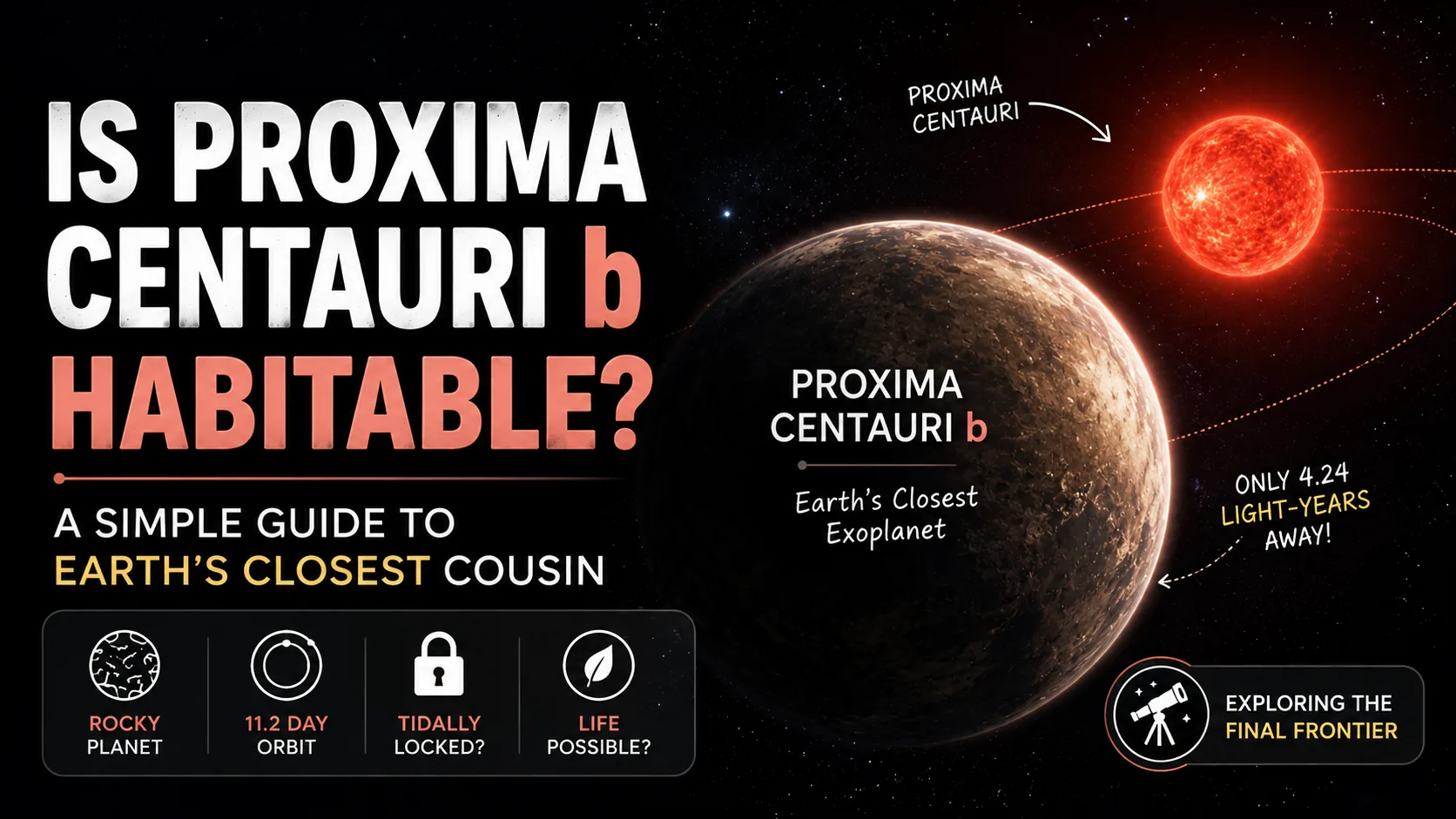
In our previous article, we met Proxima Centauri, the closest star to our Sun. But a star is much more interesting when it has companions. Meet Proxima Centauri b, a rocky world that orbits this tiny red dwarf and has captured the imagination of scientists worldwide.
A Super-Earth in the Neighborhood
Proxima Centauri b is what astronomers call a "super-Earth." It is slightly larger than our home planet, with a mass about 1.07 times that of Earth. Despite being so close to us in cosmic terms, it is still 4.25 light-years away.
What makes Proxima b special is its location. It orbits within the star's "habitable zone," the region where temperatures might allow liquid water to exist on the surface. If water can exist, then life as we know it might have a chance to thrive.
The Mystery of Tidal Locking
One of the biggest challenges for life on Proxima b is how it moves. Because it is so close to its star, it likely experiences "tidal locking." This means one side of the planet always faces the star (permanent day), while the other side is stuck in eternal darkness.
Imagine a world where the sun never sets on one side and never rises on the other. Scientists are currently studying whether an atmosphere could circulate heat from the day side to the night side, creating a narrow band of habitable conditions along the "terminator line" the border between day and night.
More Than Just One Planet?
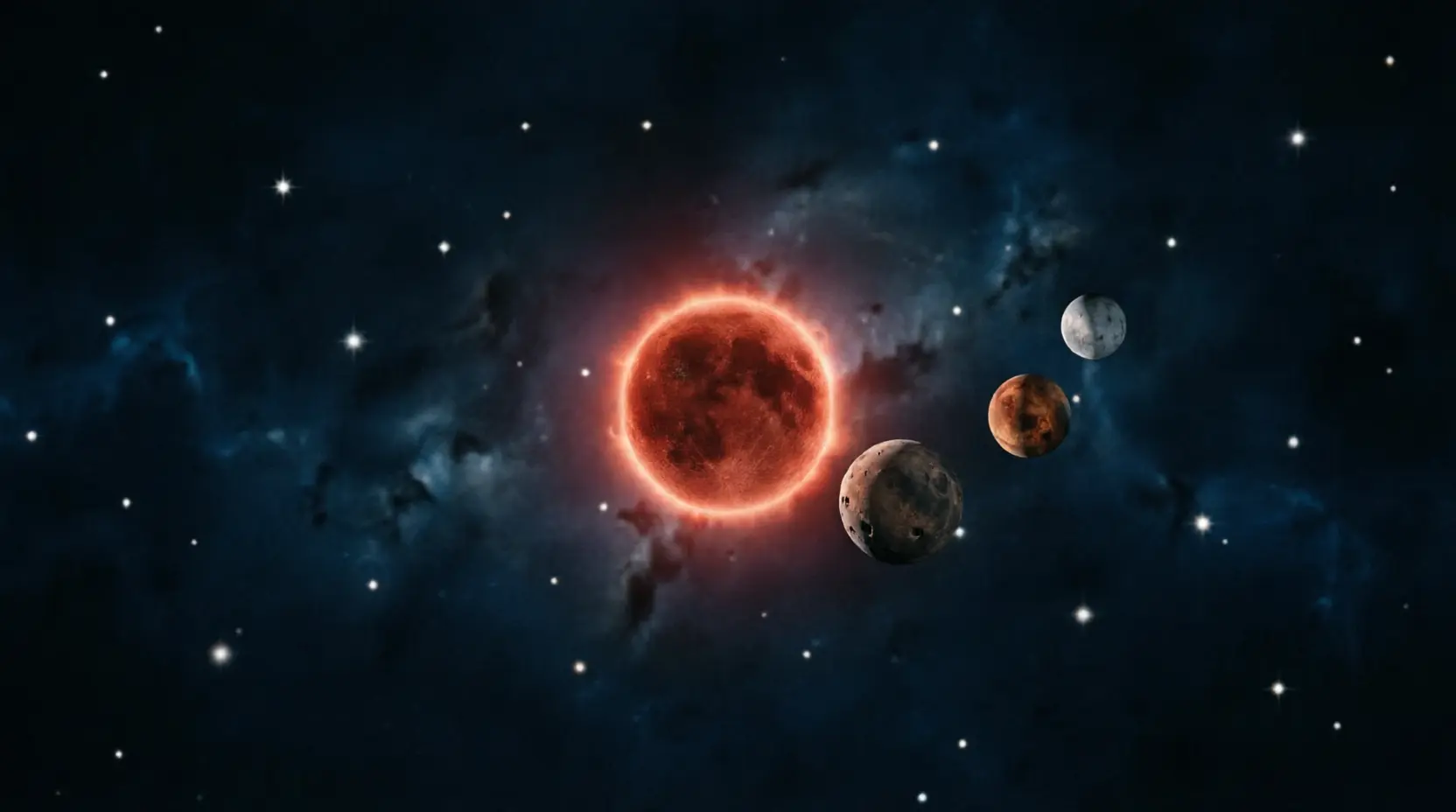
While Proxima b gets most of the attention, it is not alone. Astronomers have also detected signals suggesting the presence of at least two other planets in the system: Proxima c and Proxima d. These worlds are likely much colder and further out, but their discovery shows that Proxima Centauri is a busy little system.
Can We Visit It?
With current technology, reaching Proxima b would take tens of thousands of years. However, projects like Breakthrough Starshot are exploring the idea of sending tiny, laser-propelled spacecraft that could reach the system in just a few decades. While we can't visit yet, telescopes like the James Webb Space Telescope are helping us peek at its atmosphere to see if it has one at all.
Conclusion
Proxima Centauri b is a fascinating reminder that we are not alone in the universe, even if our neighbors are very different from us. Whether it is a barren rock or a hidden oasis, it remains our best bet for finding an Earth-like world nearby. In the final part of our series, we will look at the dangers lurking around this star and what they mean for the future of interstellar travel.