How Far Is the Exosphere From Earth? Key Distance Facts
Wondering how far the exosphere is from Earth? Discover the exact altitude range of Earth's outer atmosphere layer and how solar activity impacts it.
When we look up at the sky, it is easy to think that space starts right above the clouds. However, Earth's atmosphere actually stretches much farther than most people realize. The outermost layer of our atmosphere is called the exosphere, and understanding its distance helps us define where our planet ends and outer space begins. So, how far is the exosphere from earth exactly?
The Exact Altitude Range of the Exosphere
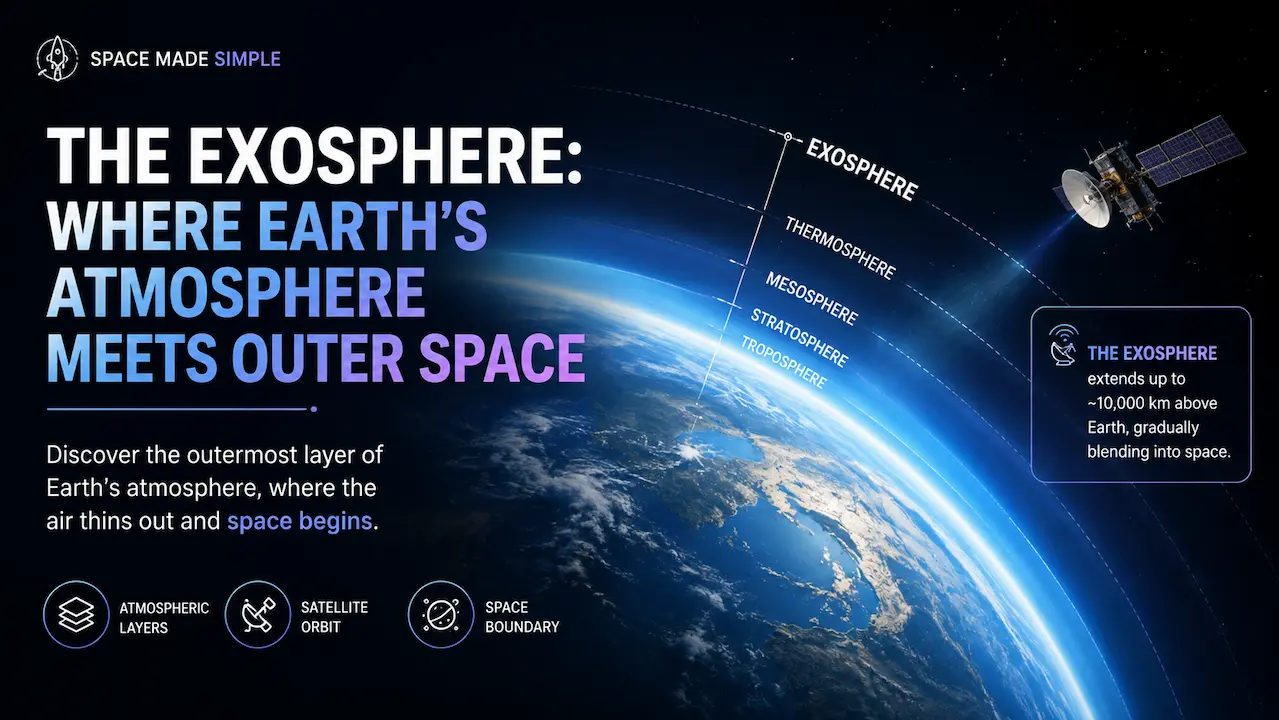
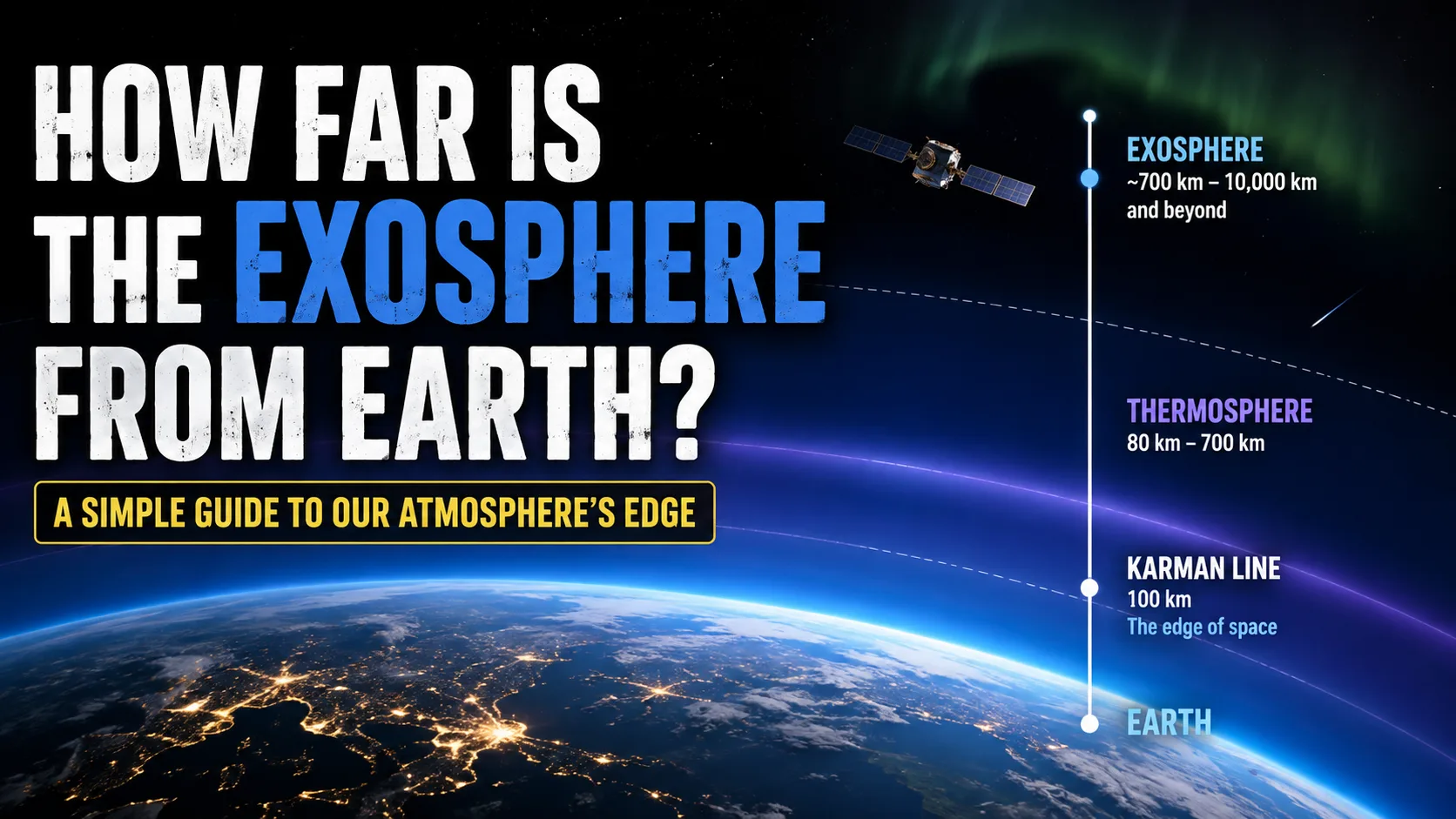
The exosphere does not have a single fixed distance because atmospheric boundaries shift based on solar activity and temperature. Generally, the exosphere begins at an altitude between 500 and 1,000 kilometers (310 to 620 miles) above Earth's surface. This lower boundary is known as the exobase, which sits directly above the thermosphere.
The upper limit of the exosphere is even more variable and gradually fades into the vacuum of space. Most scientific sources state that the exosphere extends up to 10,000 kilometers (6,200 miles) from Earth. At this extreme distance, gas molecules are so sparse that they rarely collide and can escape into interplanetary space. Some researchers even argue that traces of Earth's geocorona extend as far as 200,000 kilometers, though the functional atmospheric boundary is widely accepted at the 10,000-kilometer mark.
Why the Distance Varies
Unlike solid ground, the atmosphere is made of gas that expands and contracts. During periods of high solar activity, the sun heats the upper atmosphere and causes the exobase to rise higher above the surface. Conversely, during solar minimums, the exosphere shrinks closer to Earth. This dynamic nature means there is no permanent, hard line separating the exosphere from the rest of the atmosphere.
It is also important to distinguish the exosphere from the Kármán line, which is commonly used to define the legal edge of space for aviation and astronautics. The Kármán line sits at just 100 kilometers (62 miles) above sea level, well below where the exosphere actually begins. While astronauts may be considered "in space" when crossing the Kármán line, they are still technically within the thermosphere and have not yet reached the exosphere.
What Exists at This Distance
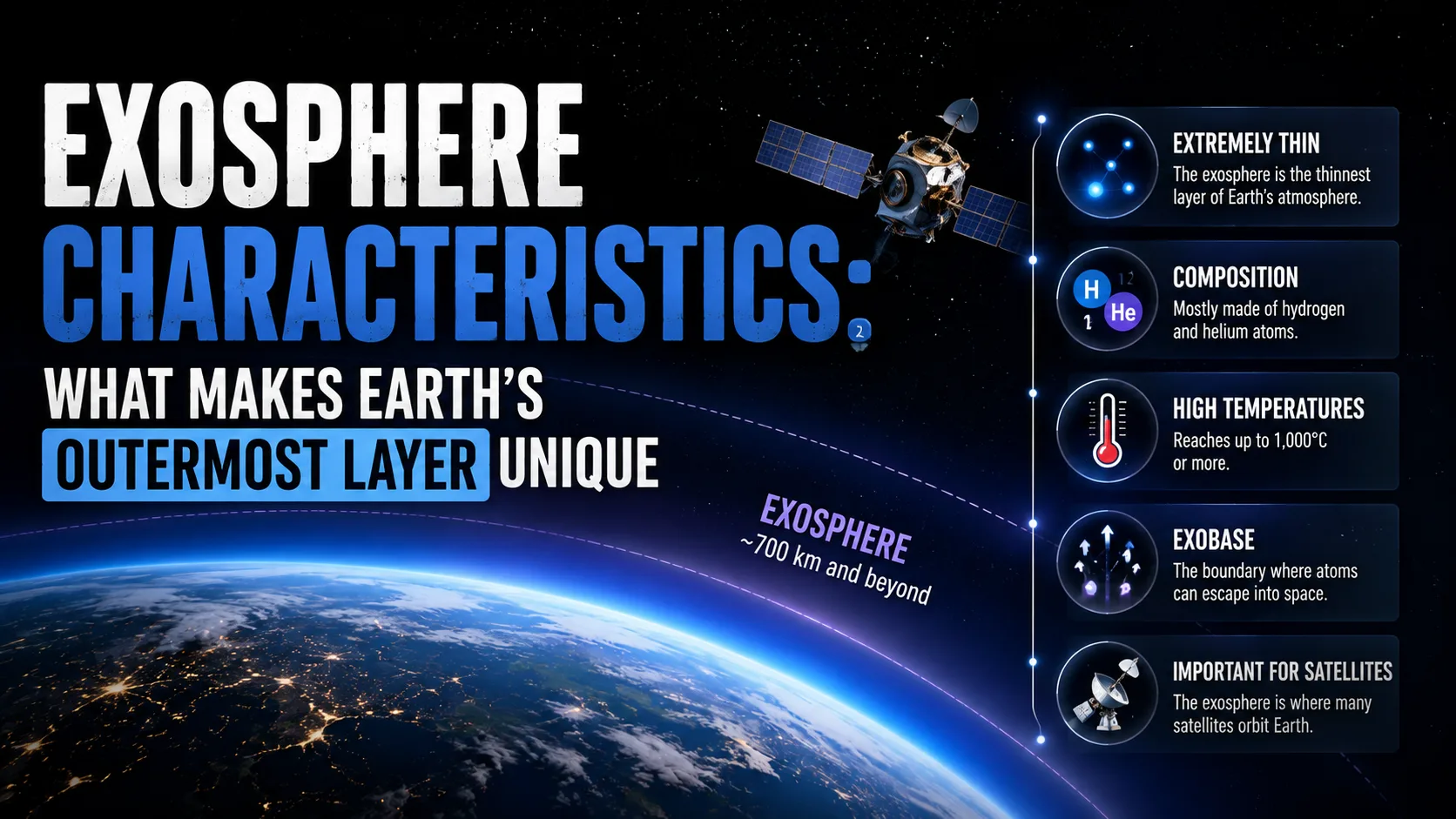
Even though the exosphere is incredibly thin, it is not completely empty. This layer contains mostly hydrogen and helium atoms that are loosely bound by Earth's gravity. Many artificial satellites, including those used for GPS and weather monitoring, orbit within the lower regions of the exosphere. Because air resistance is nearly nonexistent at these altitudes, satellites can maintain stable orbits for years without needing frequent propulsion adjustments.
Understanding NASA's explanation of the exosphere makes it clear that this layer serves as the final transitional zone before true interplanetary space. For readers interested in broader atmospheric context, exploring UCAR's overview of Earth's atmospheric layers provides excellent foundational knowledge about how each layer interacts with the next. Additionally, learning about NOAA's detailed atmospheric layer breakdown helps clarify why scientists use ranges rather than fixed numbers when measuring these distant boundaries.
Final Thoughts
To answer the question simply: the exosphere starts roughly 500 to 1,000 kilometers above Earth and stretches outward to approximately 10,000 kilometers. This vast region represents the gradual transition from our protective atmosphere to the endless void of space. While the exact distance fluctuates with solar conditions, the exosphere remains a critical zone for satellite operations and our understanding of planetary science.