4 Key Exosphere Characteristics: Where Earth Meets Space
Discover unique exosphere characteristics! Learn how Earth's topmost atmosphere operates like a vacuum, holds satellites, and fades into space.
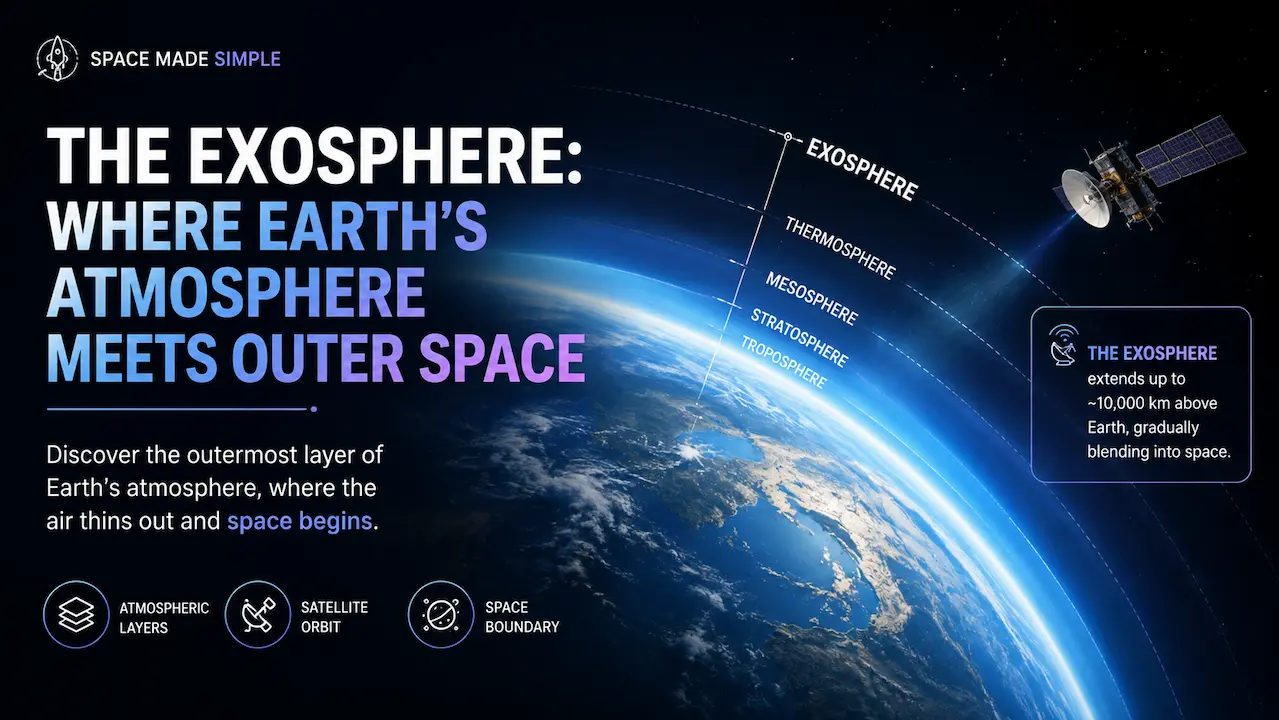
The exosphere is the final frontier of Earth's atmosphere before reaching the true vacuum of outer space. Unlike the lower layers where weather happens and airplanes fly, this region operates under completely different physical rules. Understanding exosphere characteristics helps explain how our planet transitions into space and why this layer is essential for modern technology.
Extremely Low Density and Near-Vacuum Conditions
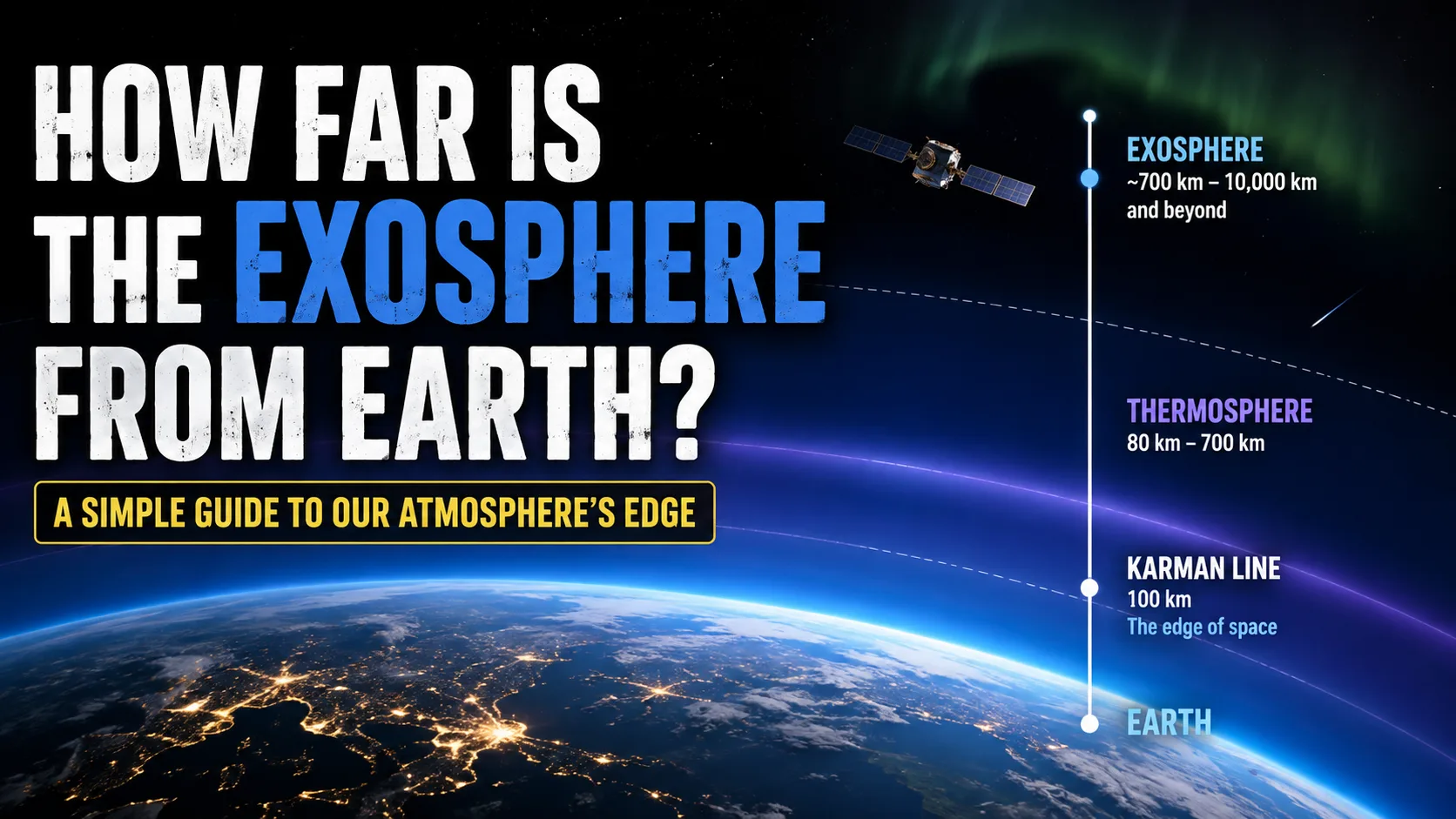
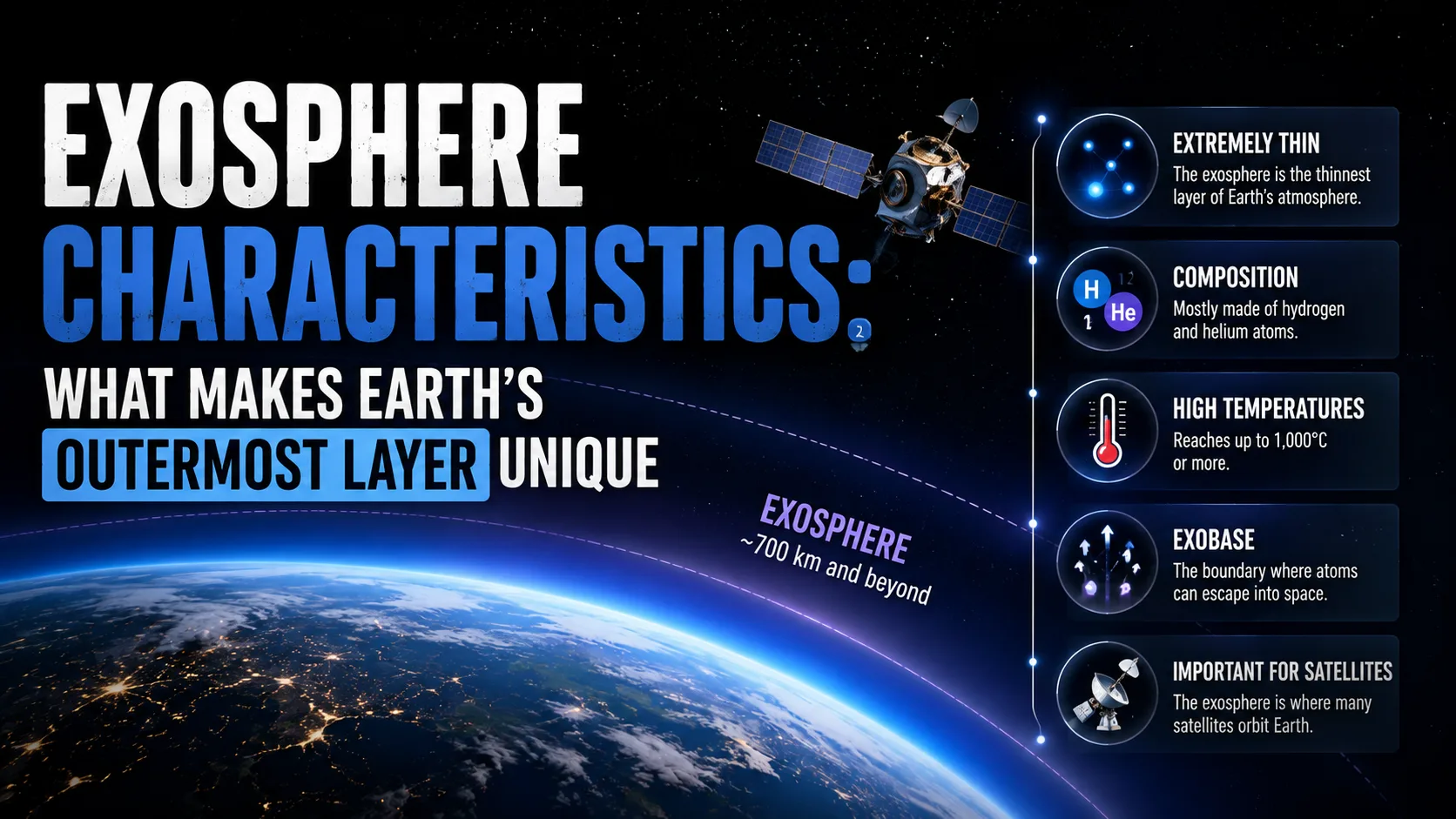
The most defining feature of the exosphere is its incredibly low density. Gas particles in this layer are so far apart that they rarely collide with one another, making the environment behave more like a vacuum than traditional air. There is absolutely no breathable air at this altitude, and the pressure is virtually nonexistent compared to sea level. Because molecules are gravitationally bound but loosely held, many atoms eventually escape into interplanetary space rather than falling back to Earth. This gradual fading means there is no sharp upper boundary where the exosphere definitively ends. For readers who want to understand the exact altitude range of this layer, our guide on how far is the exosphere from earth breaks down the numbers in simple terms.
Dominance of Lightest Elements
While the lower atmosphere is rich in nitrogen and oxygen, exosphere characteristics include a composition dominated by the lightest elements. Hydrogen and helium make up the vast majority of particles in this region because heavier gases settle closer to the surface due to gravity. Trace amounts of atomic oxygen and other heavier molecules can be found near the exobase, but they become increasingly rare at higher altitudes. The abundance of hydrogen creates a faint glow known as the geocorona, which extends far beyond the visible edge of the atmosphere.
High Temperatures That Do Not Feel Hot
Temperature in the exosphere can reach anywhere from 500 to 2,000 degrees Celsius depending on solar activity. However, this extreme heat does not transfer energy the way we experience it on the ground. Because particles are so sparse, there is insufficient molecular contact to transmit thermal energy to objects or spacecraft passing through. A satellite in the exosphere would not burn up from atmospheric heat; instead, its temperature is primarily determined by direct solar radiation and internal systems rather than surrounding air temperature.
Orbital Home for Satellites
One of the most practical exosphere characteristics is its suitability for artificial satellites. The near-absence of atmospheric drag allows spacecraft to maintain stable orbits for extended periods without constant fuel consumption. Many GPS, weather, and communication satellites operate within the lower regions of this layer. Additionally, the exosphere serves as the first threshold that absorbs incoming solar and cosmic radiation before it reaches the denser layers below. To better understand how this layer functions as a transition zone, check out our article on the exosphere where atmosphere meets space.
For readers seeking foundational knowledge, NASA Space Place offers an excellent kid-friendly overview of this atmospheric boundary. Those interested in deeper scientific context can explore UCAR Center for Science Education’s detailed exosphere guide to understand how researchers study this elusive layer. Furthermore, Study.com provides comprehensive lessons on exosphere definition and temperature for students wanting structured educational material.
Why These Characteristics Matter
The unique properties of the exosphere distinguish it from every other atmospheric layer. Its near-vacuum state, hydrogen-rich composition, counterintuitive temperature behavior, and orbital utility make it a critical zone for both planetary science and human technology. While invisible to the naked eye, understanding these exosphere characteristics reveals how Earth maintains its delicate balance between protecting life below and connecting to the cosmos above.