Venus Shines Brightest Tonight: How to See the Evening Star in August 2026
Venus reaches its greatest eastern elongation this week. Learn why it shines so brightly and how to spot it easily in the evening sky without any special equipment.
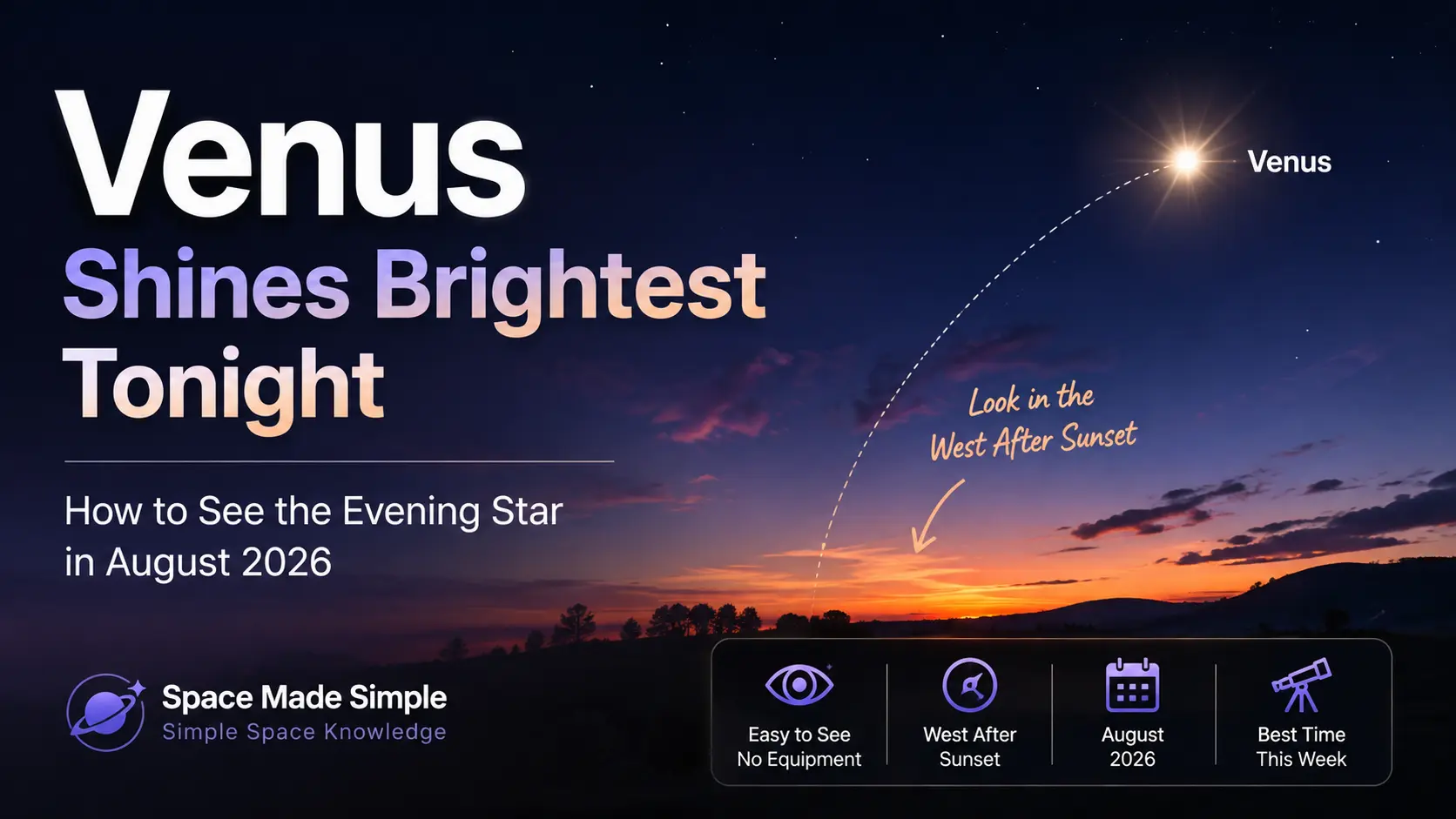
If you look toward the western horizon shortly after sunset this week, you will notice an incredibly bright point of light dominating the twilight sky. That brilliant beacon is Venus, and right now it is reaching a special milestone known as its greatest eastern elongation. This event makes Venus appear farther from the Sun than usual, giving skywatchers a longer window to observe it before it dips below the horizon.
What Is Greatest Eastern Elongation?
In simple terms, greatest elongation is the moment when an inner planet like Venus appears at its widest angle from the Sun as seen from Earth. Because Venus orbits closer to the Sun than we do, it never strays too far from our star in the night sky. During this particular alignment in mid-August 2026, Venus reaches its maximum apparent separation, making it easier to view without the overwhelming glare of sunlight. You do not need a telescope or binoculars to enjoy this sight, as the planet is visible to the naked eye even from areas with moderate light pollution.
Why Does Venus Shine So Brightly?
Venus is currently shining at magnitude -4.3, making it the third brightest object in our sky after the Sun and the Moon. There are two main reasons for this intense brilliance. First, Venus is Earth’s closest planetary neighbor, meaning it reflects sunlight back to us from a relatively short distance. Second, the planet is completely shrouded in thick clouds that reflect about 70% of the sunlight hitting them, acting like a giant mirror in space.
Viewing Tips for Tonight
To get the best view of Venus during this elongation, find a spot with a clear, unobstructed view of the western horizon about 30 to 45 minutes after sunset. The planet will be located in the constellation Virgo and may appear near the waxing crescent moon later this week, creating a beautiful pairing for casual observers. If you happen to have a small telescope or steady binoculars, you might even notice that Venus looks half-lit, similar to a quarter moon phase, which confirms its position relative to Earth and the Sun.
For more detailed sky maps and real-time visibility data based on your exact location, you can check resources like In-The-Sky.org. Additionally, NASA provides excellent monthly guides for beginners who want to learn more about current celestial events through their What's Up Skywatching Tips. Remember that while Venus is stunning to look at, never point optical devices directly at the Sun if you are observing during daytime hours; always wait until the Sun has fully set for safe viewing. For deeper insights into planetary brightness and atmospheric science, the Planetary Society Night Sky Guide offers accessible explanations perfect for curious minds.