Comet C/2025 A7 (ATLAS): A Simple Guide to 2026’s Brightest Visitor
Learn what makes Comet C/2025 A7 (ATLAS) special in 2026. A simple, jargon-free guide on how comets work, why they glow, and safe viewing tips for beginners.
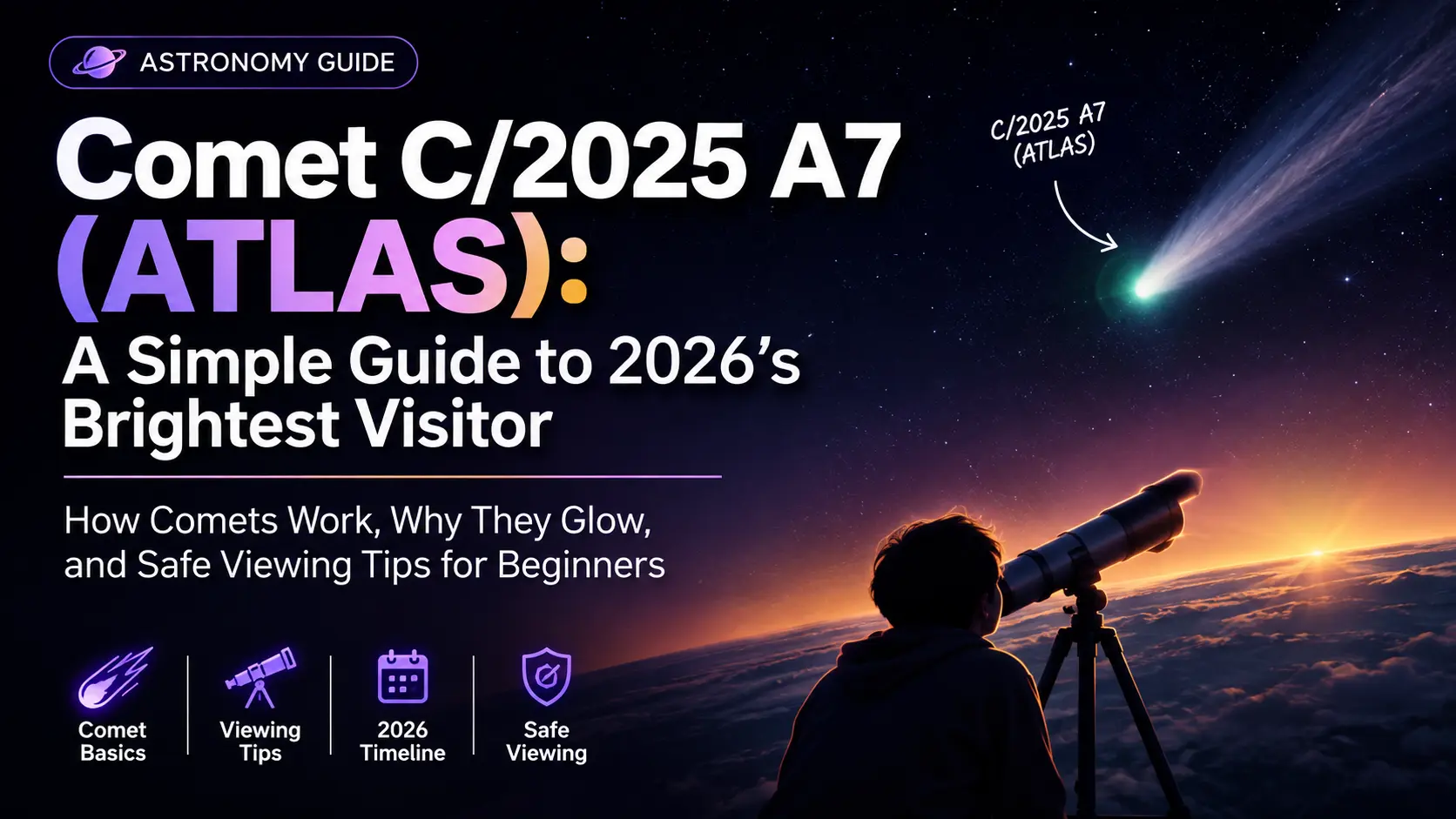
If you have looked up at the night sky recently or scrolled through space news, you might have heard about Comet C/2025 A7 (ATLAS). Astronomers are calling it one of the most promising comets of 2026. But what exactly is this object, and why does everyone seem so excited about it?
At Space Made Simple, we believe you do not need a degree in astrophysics to enjoy the cosmos. Here is everything you need to know about this icy visitor, explained in plain English.
What Exactly Is a Comet?
Think of a comet as a dirty snowball floating in space. Unlike stars that produce their own light, or planets that reflect sunlight steadily, comets are made of ice, dust, and rocky material left over from the formation of our solar system.
When a comet travels far from the Sun, it is just a frozen, dark chunk of ice. However, as it gets closer to our star, things change dramatically. The heat causes the ice to turn directly into gas, releasing trapped dust along with it. This process creates two distinct features:
- The Coma: A glowing cloud of gas and dust that surrounds the solid center, making the comet look fuzzy rather than sharp like a star.
- The Tails: Solar wind and radiation pressure push the released material away from the Sun, creating spectacular tails that can stretch millions of kilometers across space.
For a deeper understanding of how these celestial bodies differ from asteroids, check out this NASA Solar System Overview.
Why Is Comet ATLAS Getting So Much Attention?
Not all comets put on a good show. Many remain too faint to see without powerful telescopes. Comet C/2025 A7 (ATLAS) is different because of its predicted brightness and favorable viewing geometry for Earth-based observers in 2026.
Discovered by the Asteroid Terrestrial-impact Last Alert System survey, early calculations suggest this comet could become visible to the naked eye under dark skies. Its orbit brings it close enough to the Sun to activate significant outgassing, yet its path allows observers in both hemispheres a chance to spot it during evening or morning twilight hours.
It is important to manage expectations, though. Comets are notoriously unpredictable. They can fizzle out or surprise us with sudden outbursts. Always treat brightness forecasts as best-case scenarios rather than guarantees.
How to Safely Observe the Comet
You do not need expensive equipment to enjoy Comet ATLAS. In fact, some of the best views come from using nothing but your eyes and patience. Follow these simple steps for the best experience:
- Find Dark Skies: Light pollution is the enemy of comet watching. Drive at least 30 minutes away from city lights to a location with an unobstructed horizon.
- Check Timing: Use a free stargazing app to find out when the comet rises or sets relative to the Sun. The best viewing windows are usually 45 to 60 minutes after sunset or before sunrise.
- Let Your Eyes Adjust: Spend at least 20 minutes in complete darkness before observing. Avoid looking at phone screens, as even brief exposure to white light resets your night vision.
- Use Binoculars Wisely: While the comet may be visible to the naked eye as a smudge, binoculars can reveal structure in the tail. Never point binoculars or telescopes near the Sun unless you have certified solar filters. Permanent eye damage can occur instantly.
For current ephemeris data and safety guidelines updated weekly, visit the British Astronomical Association Comet Section.
Common Myths About Comets Debunked
Because comets have fascinated humans for millennia, many misconceptions persist. Let us clear up a few:
- Myth: Comets are burning rocks. Fact: Nothing is actually on fire. The glow comes from reflected sunlight and fluorescent gases excited by solar ultraviolet radiation.
- Myth: You can see the tail pointing straight down. Fact: Tails always point generally away from the Sun due to solar wind, regardless of which direction the comet is traveling.
- Myth: Comets bring bad luck. Fact: Historically feared as omens, we now understand comets as pristine time capsules that help scientists learn about the early solar system. Some researchers even study them to understand how water and organic molecules arrived on Earth. For more on this connection, explore resources from the European Space Agency Rosetta Mission.
Final Thoughts
Comet C/2025 A7 (ATLAS) offers a rare opportunity to witness a dynamic solar system event with minimal equipment. Whether it becomes the spectacle of the year or a modest fuzzy patch, the act of stepping outside and connecting with the universe is always worthwhile.
Grab a warm jacket, find a dark spot, and give yourself permission to simply wonder. The cosmos does not demand expertise, only curiosity.