Solar Eclipse & Perseids on Same Day: Why August 12, 2026 Is Special
On August 12, 2026, a total solar eclipse and the Perseid meteor shower peak occur together. Learn why this rare double event happens and how to watch safely.
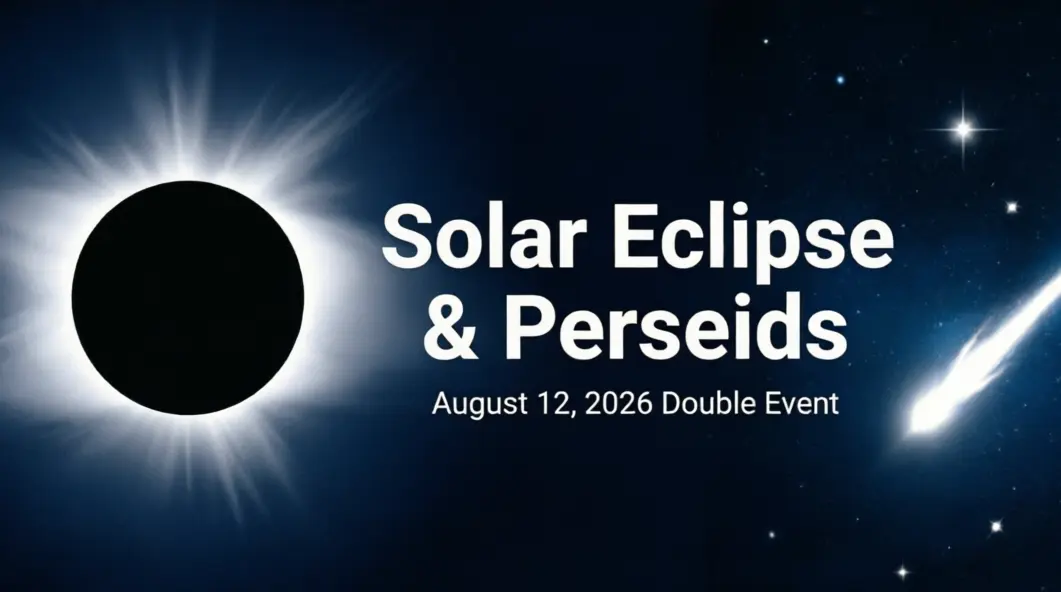
Imagine watching the Sun disappear behind the Moon during the day, then stepping outside that same night to see dozens of shooting stars streak across a moonless sky.
On August 12, 2026, skywatchers are in for a treat. A total solar eclipse and the peak of the Perseid meteor shower are happening within hours of each other. This "double cosmic show" is extremely rare and offers a perfect opportunity to understand how our solar system moves.
Here is everything you need to know about this special day, explained simply.
Why Are They Happening on the Same Day?
It might seem like the universe planned this perfectly, but it is actually a cosmic coincidence involving two different cycles:
- The Solar Eclipse: This happens when the New Moon passes directly between Earth and the Sun. Eclipses follow a predictable pattern called the Saros cycle.
- The Perseids: This meteor shower occurs every year when Earth passes through the dusty trail left behind by Comet Swift-Tuttle. The peak always falls around August 11–13.
Because the 2026 eclipse happens to fall right in the middle of the Perseid window, we get both events at once. Even better? The New Moon that causes the eclipse also means dark skies for the meteor shower later that night. As explained by EarthSky's Perseid guide, moon-free skies can make fainter meteors much easier to spot, potentially yielding 50–100 visible meteors per hour at peak.
Where and When to Watch
The Total Solar Eclipse (Daytime)
A total solar eclipse is only visible from a narrow path on Earth. On August 12, the shadow of the Moon will sweep across the Arctic Ocean, Greenland, Iceland, and northern Spain. According to NASA's official eclipse page, the longest duration of totality will be approximately 2 minutes and 18 seconds near the west coast of Iceland.
If you are outside this path, you will still see a partial eclipse where the Moon takes a "bite" out of the Sun. Always check local times for your specific location, as the eclipse timing varies significantly across regions.
The Perseid Meteor Shower (Nighttime)
After the Sun sets, the real show continues. The Perseids are best viewed from midnight to pre-dawn on August 12–13.
- How many? Under dark skies, expect 50–100 meteors per hour at peak.
- Where to look? You do not need to stare at the constellation Perseus. Meteors can appear anywhere. Just find an open area away from city lights, lie back, and let your eyes adjust for 15–20 minutes.
How to Watch the Eclipse Safely
This is the most important part of this article. Never look directly at the Sun without proper protection. Regular sunglasses, even very dark ones, are NOT safe.
Safe Methods
- Eclipse Glasses: Use only glasses certified to the ISO 12312-2 standard. Inspect them for scratches or holes before use.
- Pinhole Projector: Poke a small hole in a piece of cardboard and let sunlight pass through onto a flat surface below. You will see a crescent-shaped image of the eclipsed Sun.
- Colander Method: Hold a pasta strainer over a white sheet or paper. Each hole acts as a tiny pinhole projector.
Never Do This
- Look at the Sun through a camera, telescope, or binoculars without a dedicated solar filter. The concentrated light can instantly burn your retina.
- Assume clouds make it safe. UV and infrared radiation still penetrate cloud cover.
- Use homemade filters like smoked glass, CDs, or X-ray film. These do not block invisible harmful rays.
For comprehensive safety guidelines, always refer to the American Astronomical Society's eclipse safety recommendations, which detail exactly what equipment is approved and what myths to avoid.
Note: During the brief moment of totality (when the Moon completely covers the Sun and only the corona is visible), it IS safe to look with the naked eye. But the second the Sun starts to reappear, put your eclipse glasses back on immediately.
Why This Double Event Matters
Beyond being spectacular, August 12, 2026 is a gift for science. Solar eclipses allow researchers to study the Sun’s outer atmosphere (the corona), which is normally hidden by the Sun's glare. Meanwhile, the Perseids give us samples of ancient comet debris burning up in our atmosphere.
For the rest of us, it is a reminder of the clockwork precision of our solar system and a chance to pause, look up, and feel connected to the cosmos.
Ready for the Show?
Whether you are traveling to the path of totality or watching from your backyard, August 12 is a day to remember. Grab your certified eclipse glasses, find a dark spot for the meteors, and enjoy the universe’s double feature.
Have you ever seen a total solar eclipse or a major meteor shower? Share your experience in the comments below!